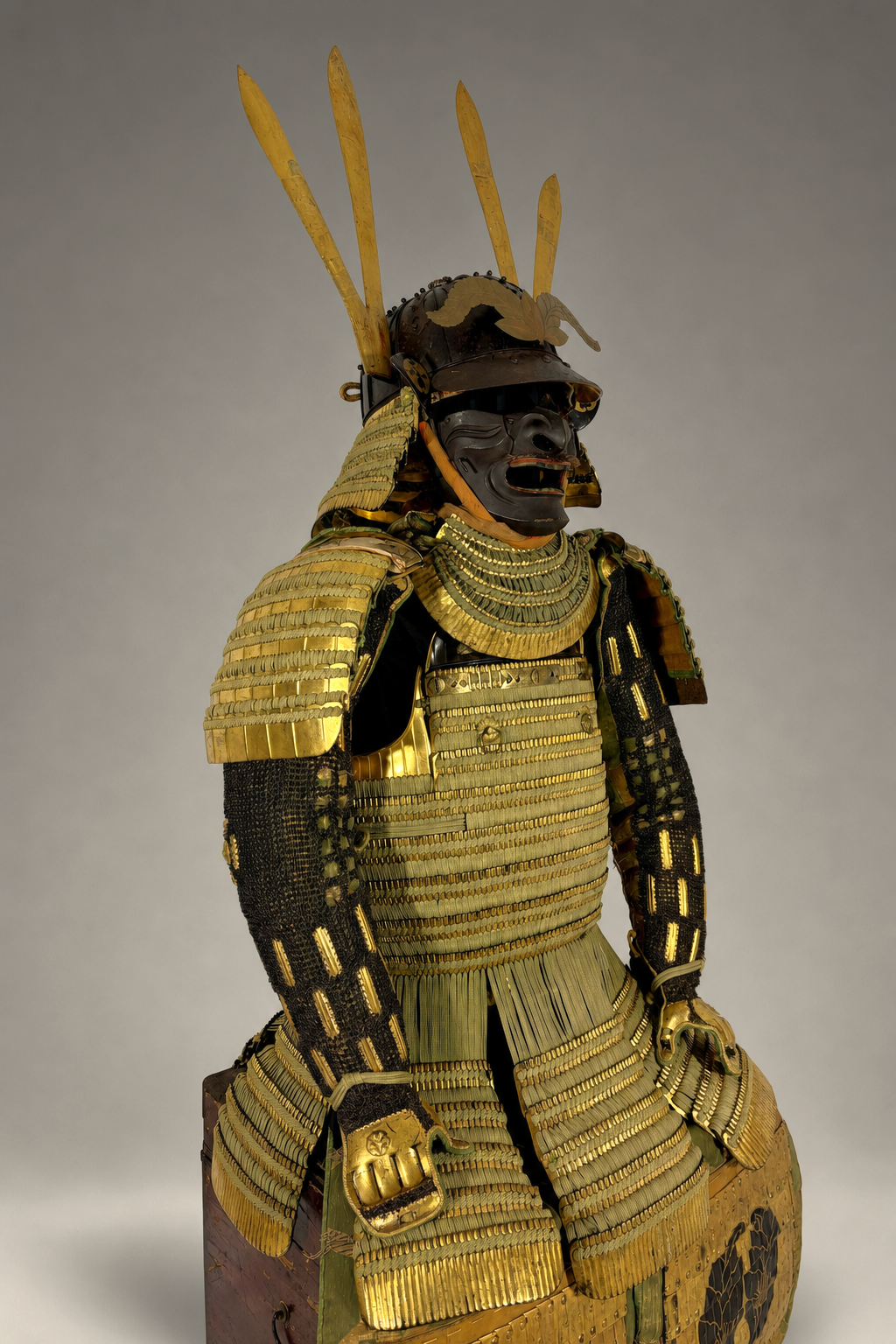
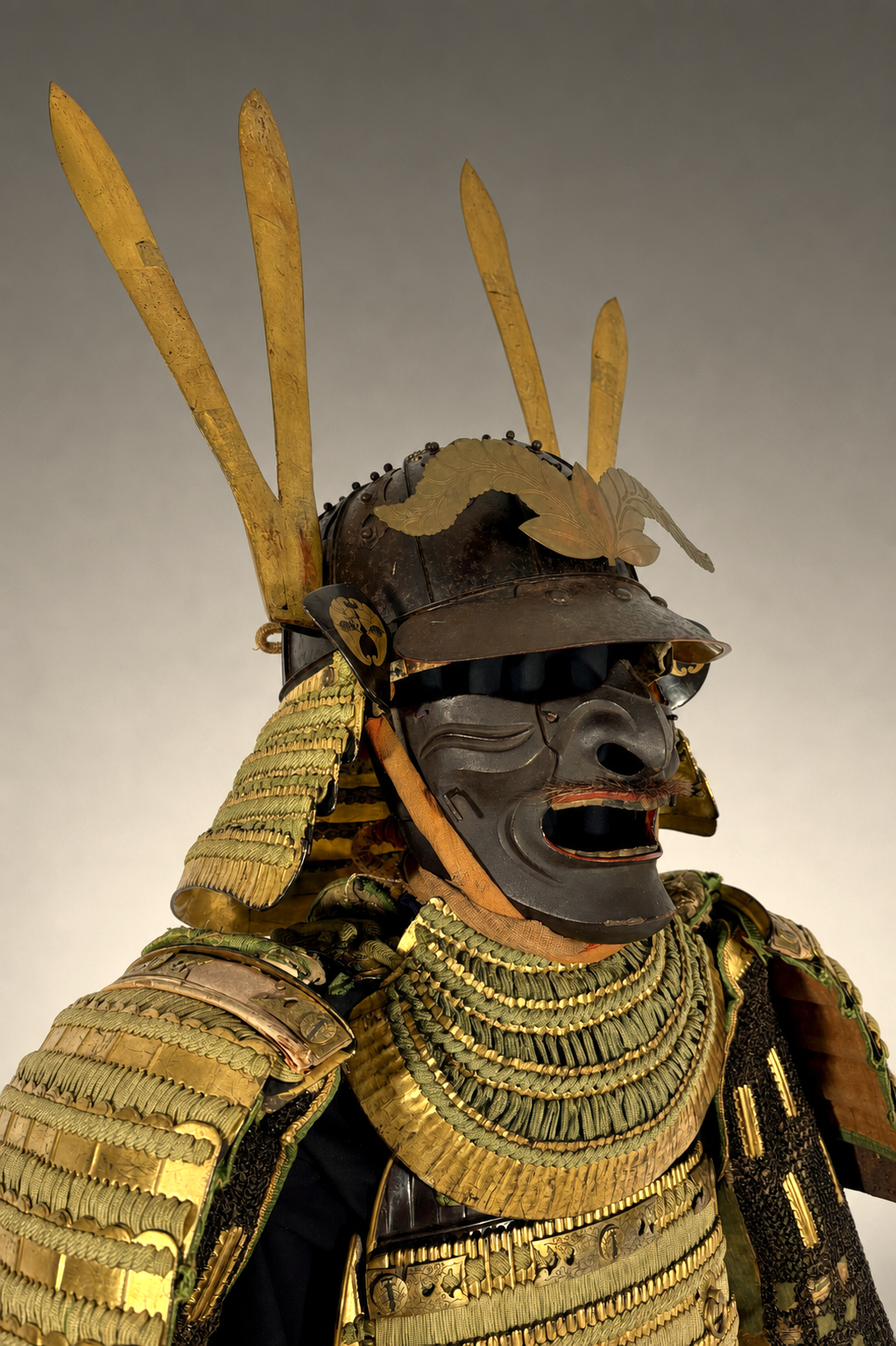
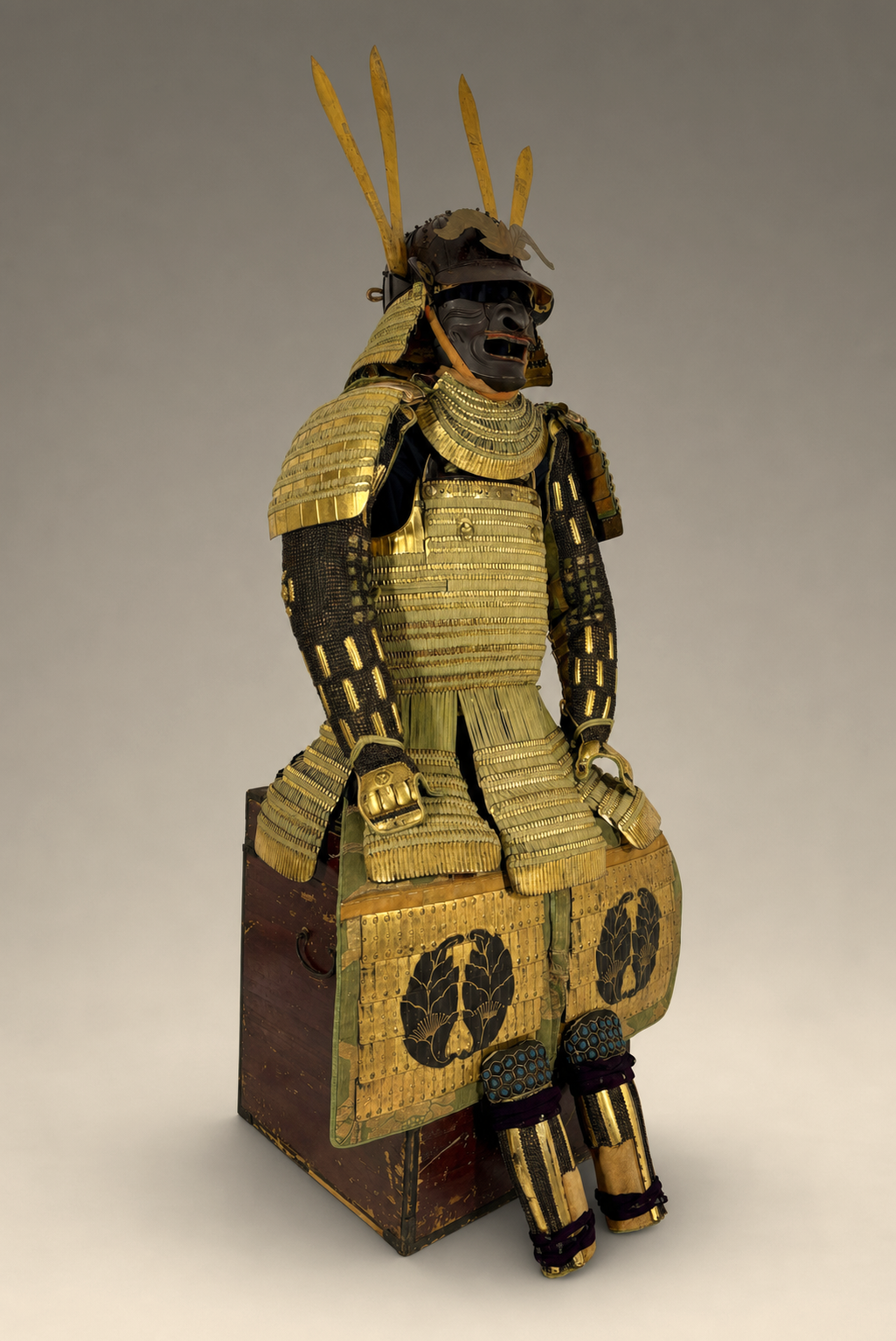
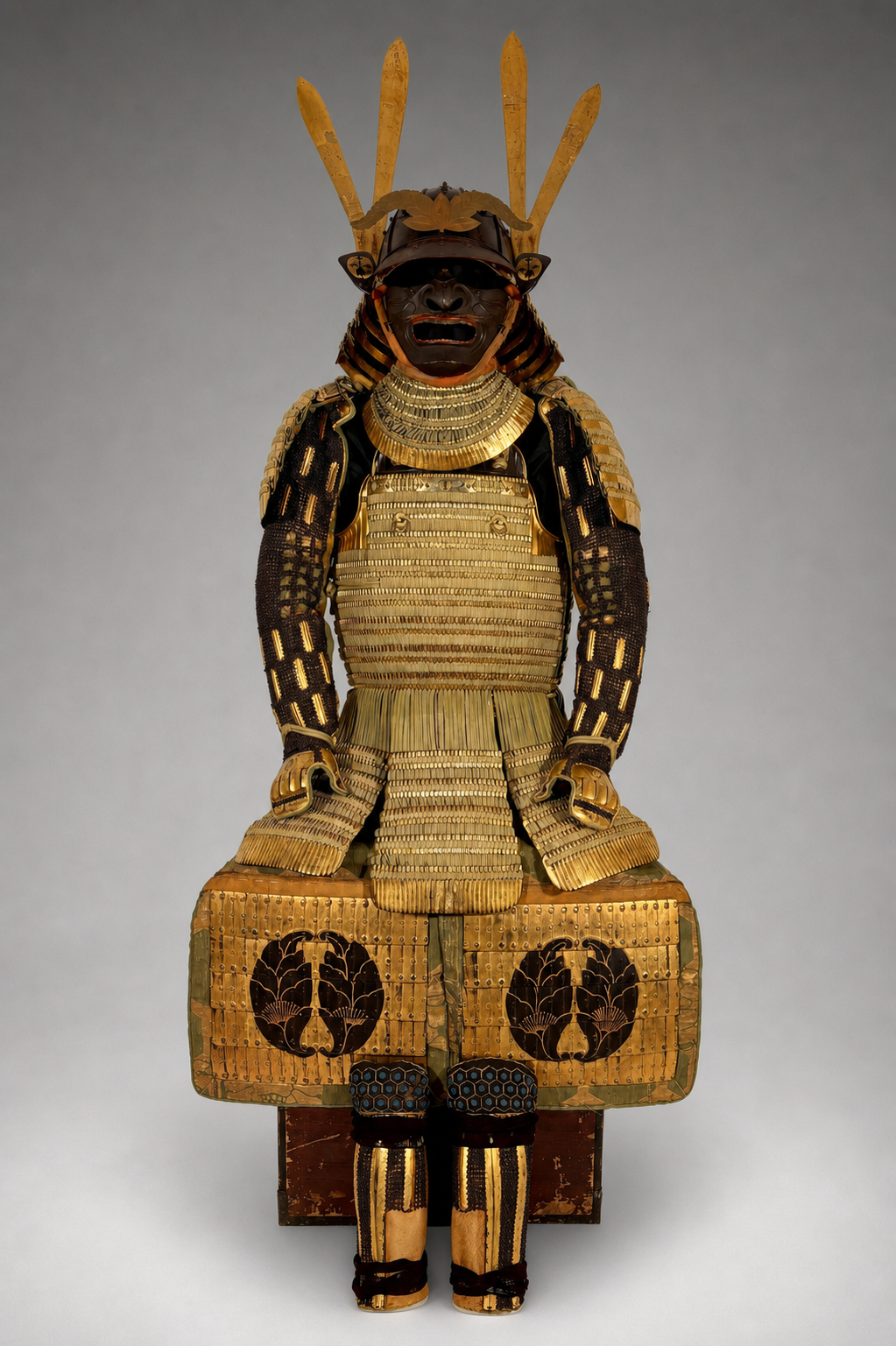
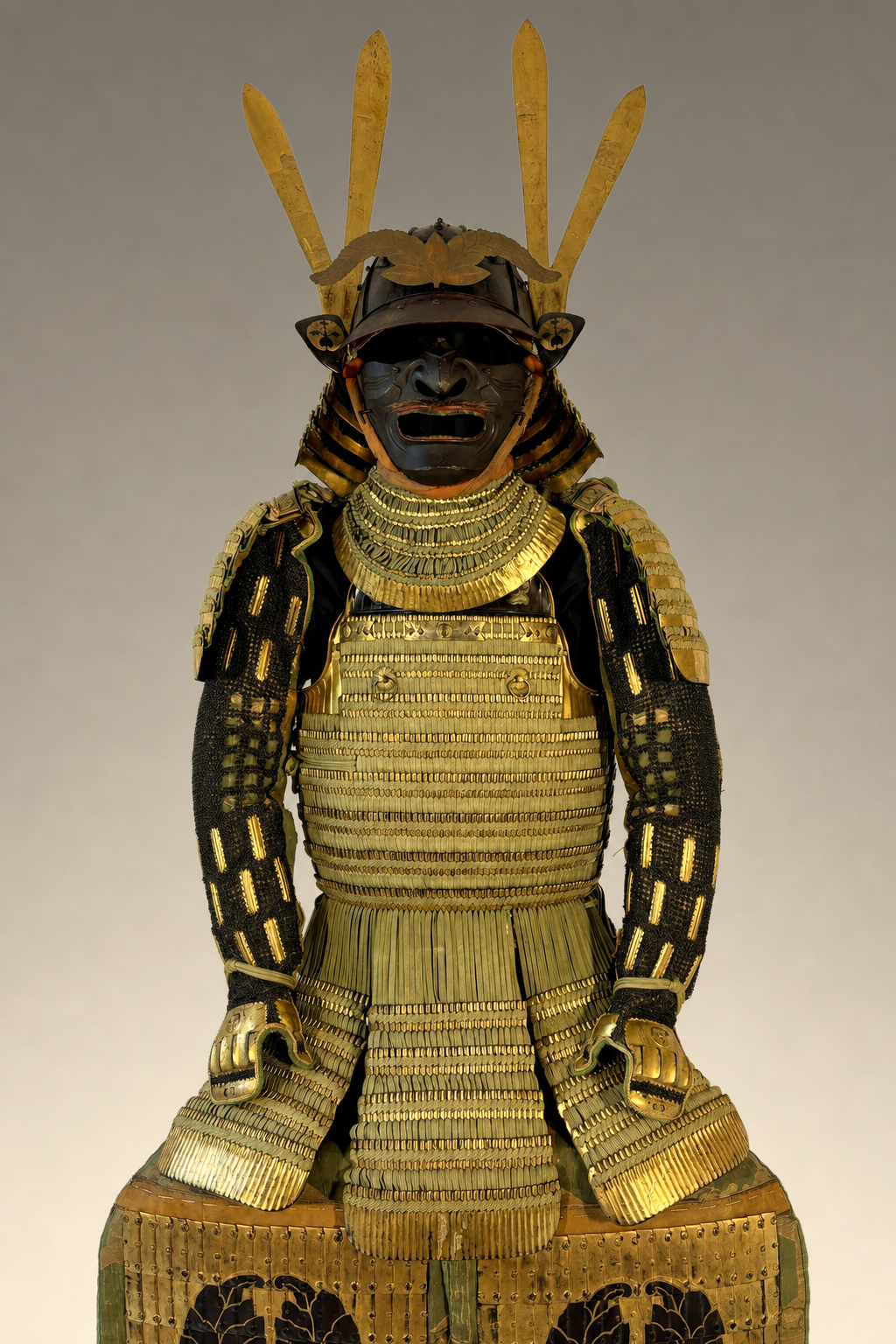
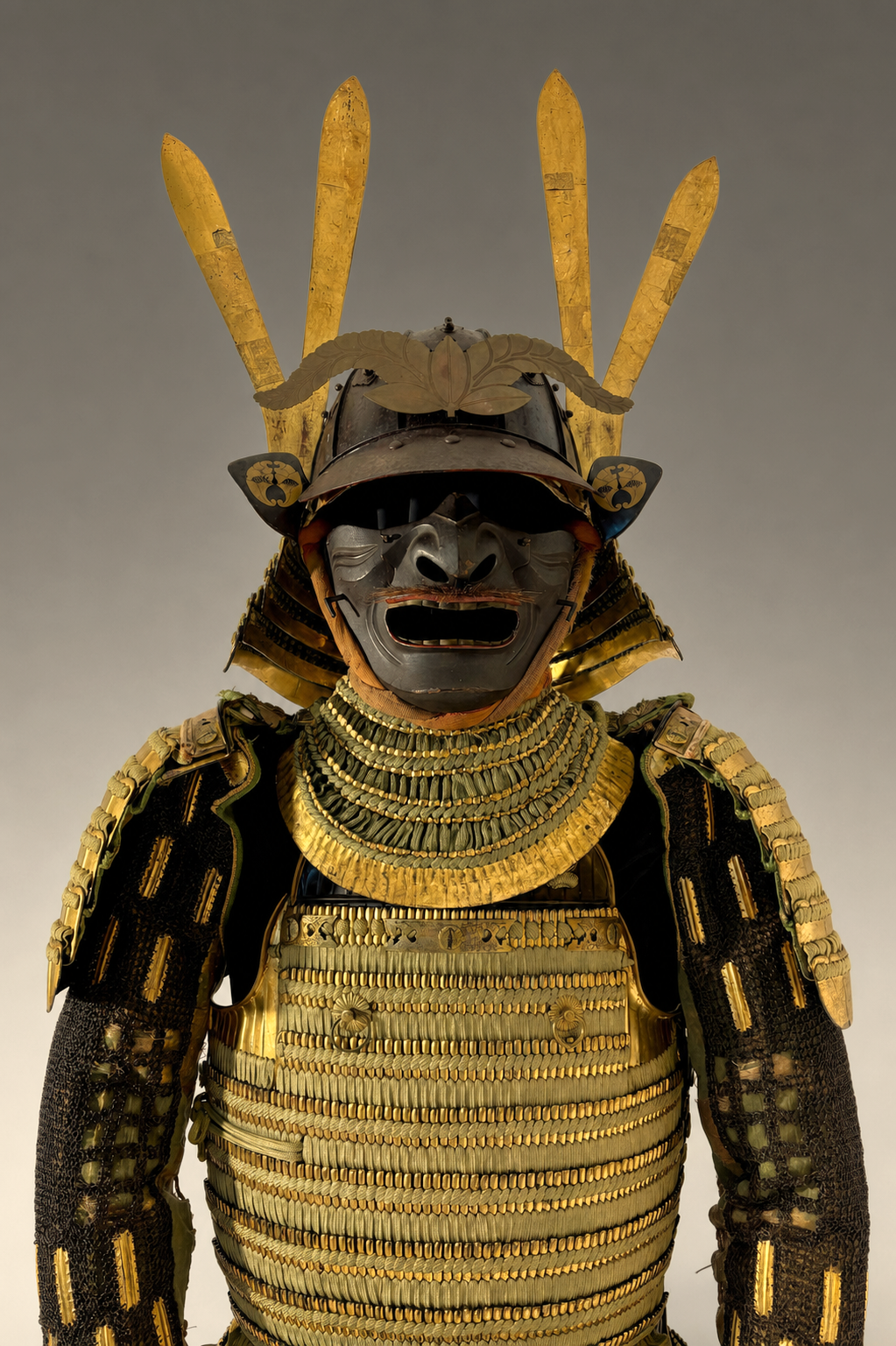
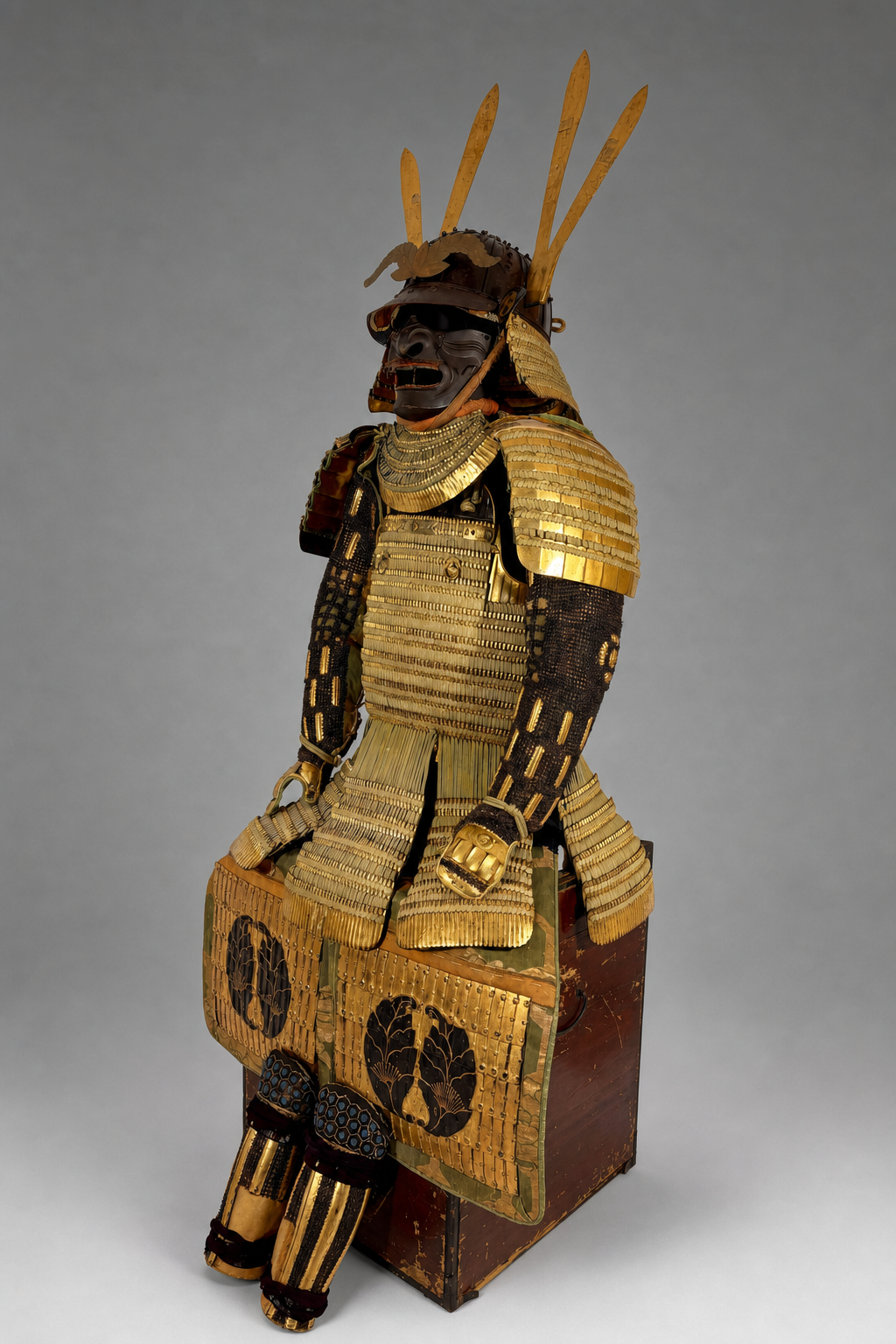
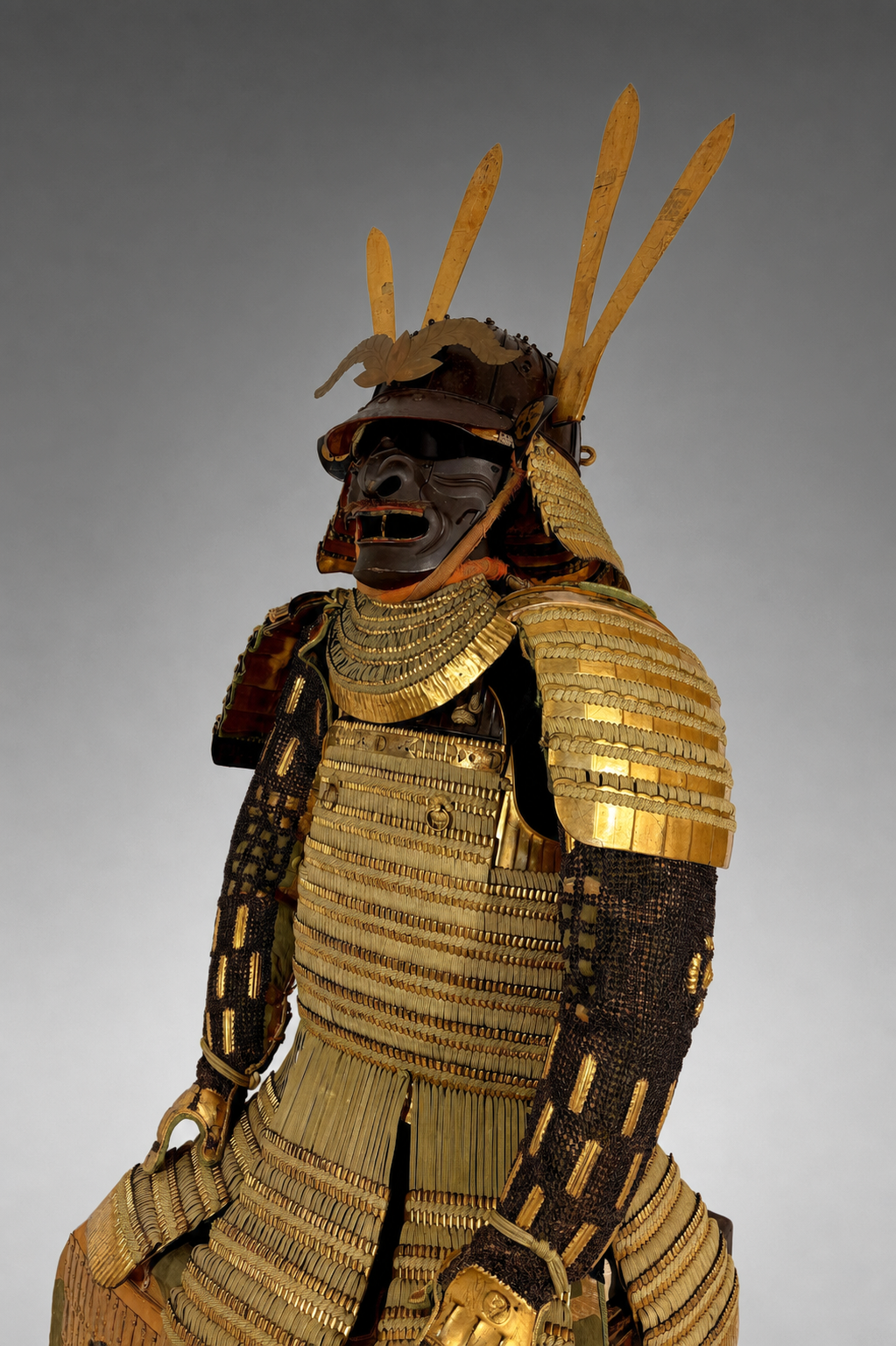
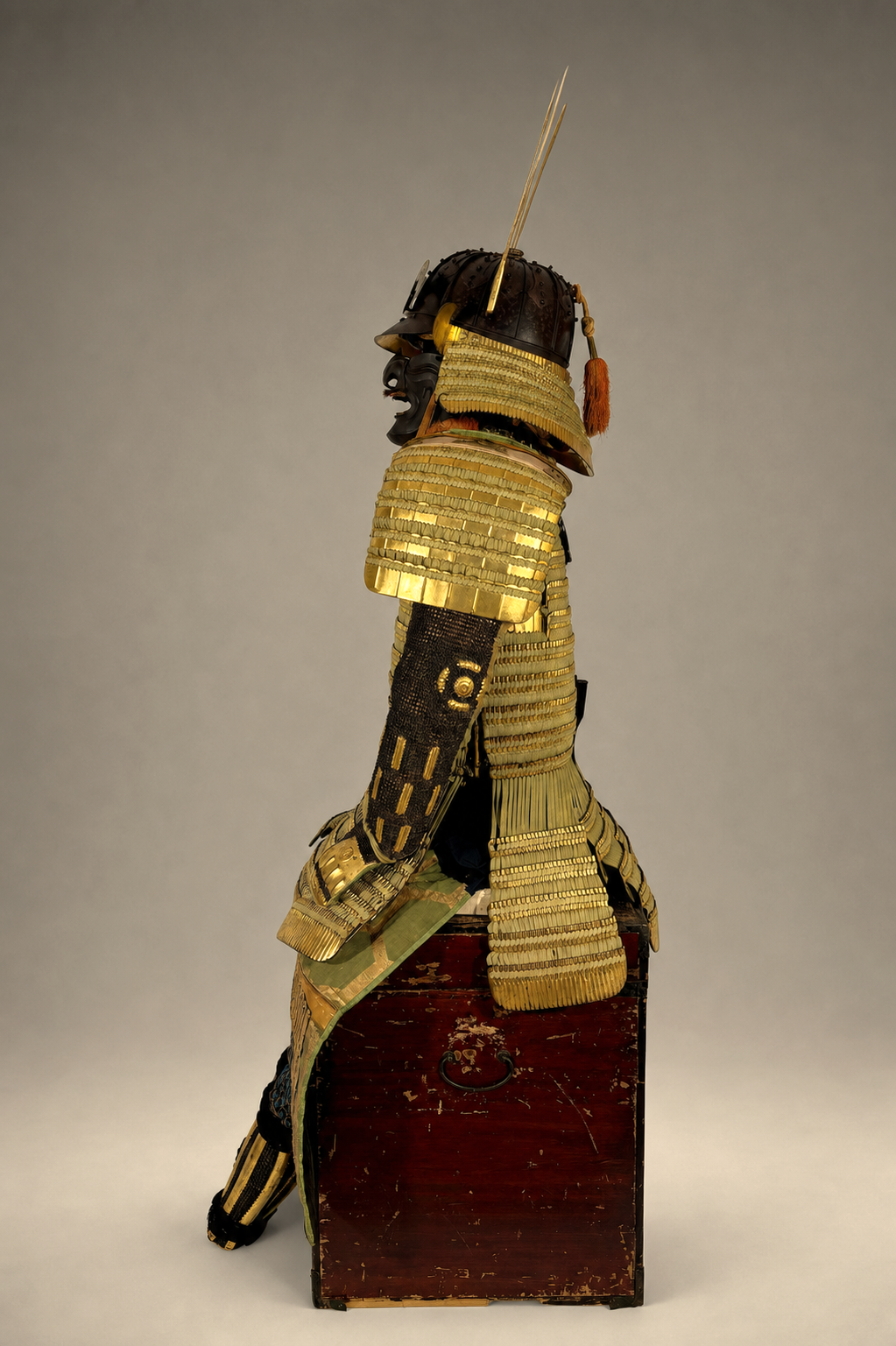
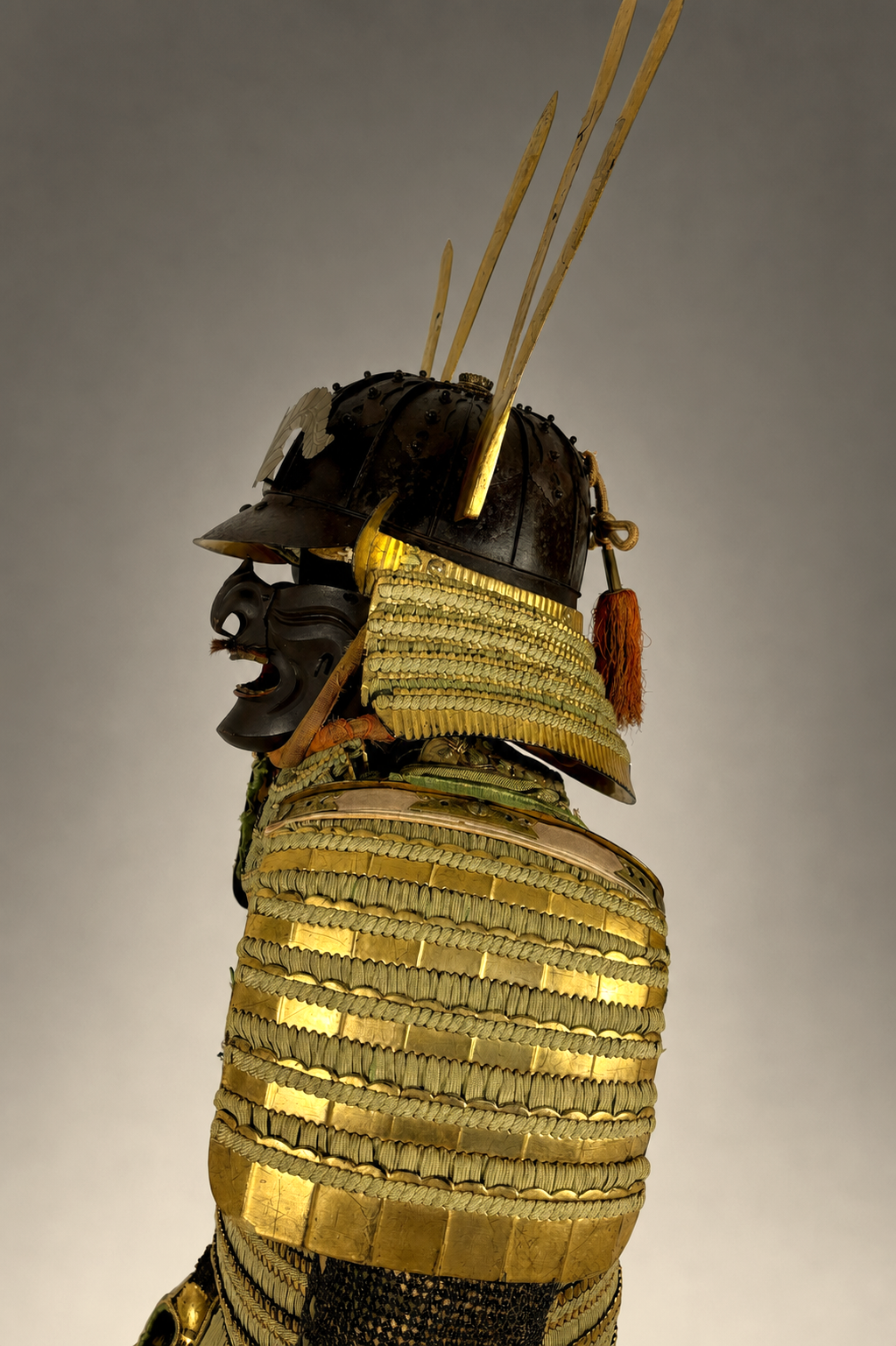
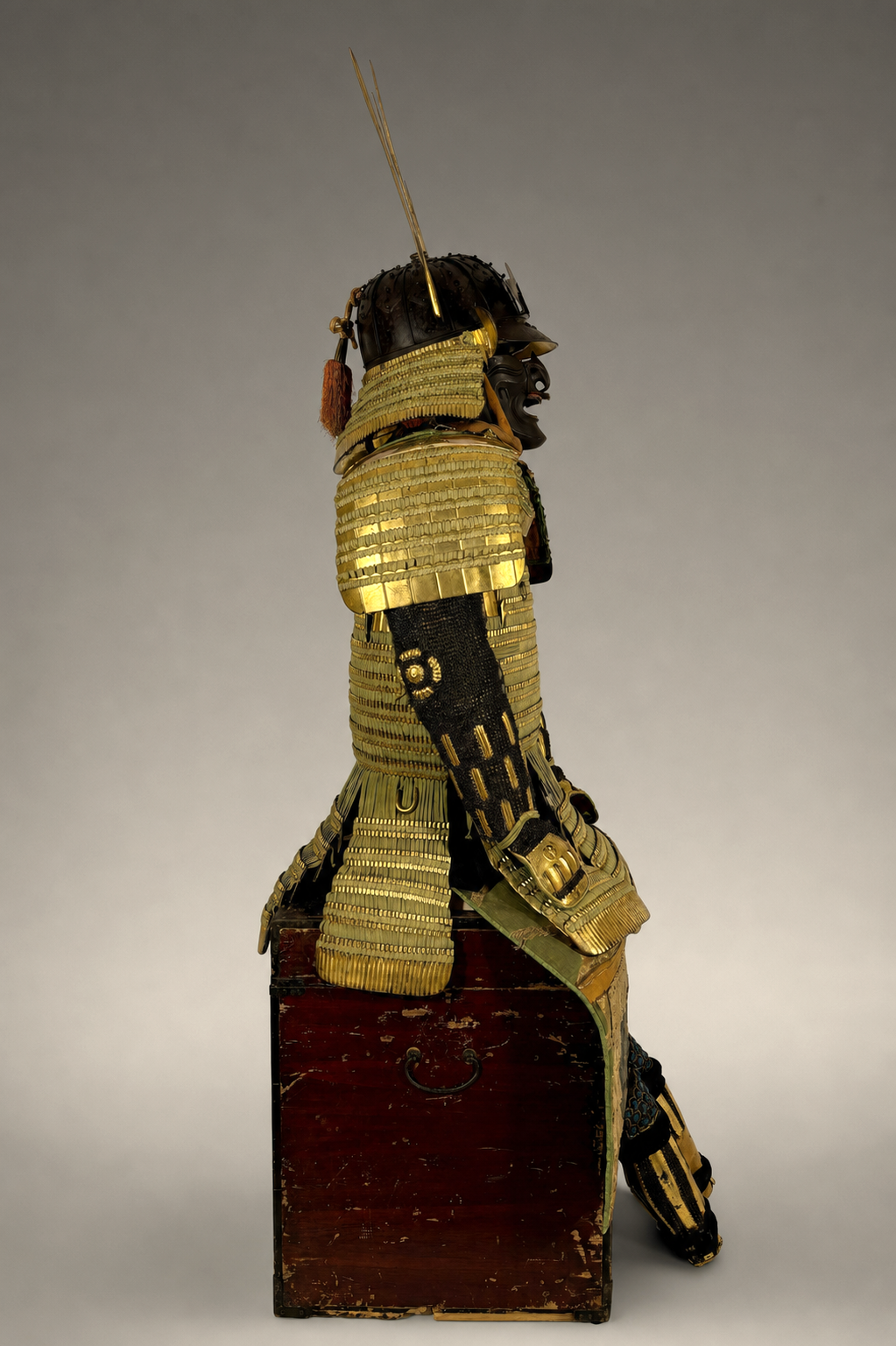
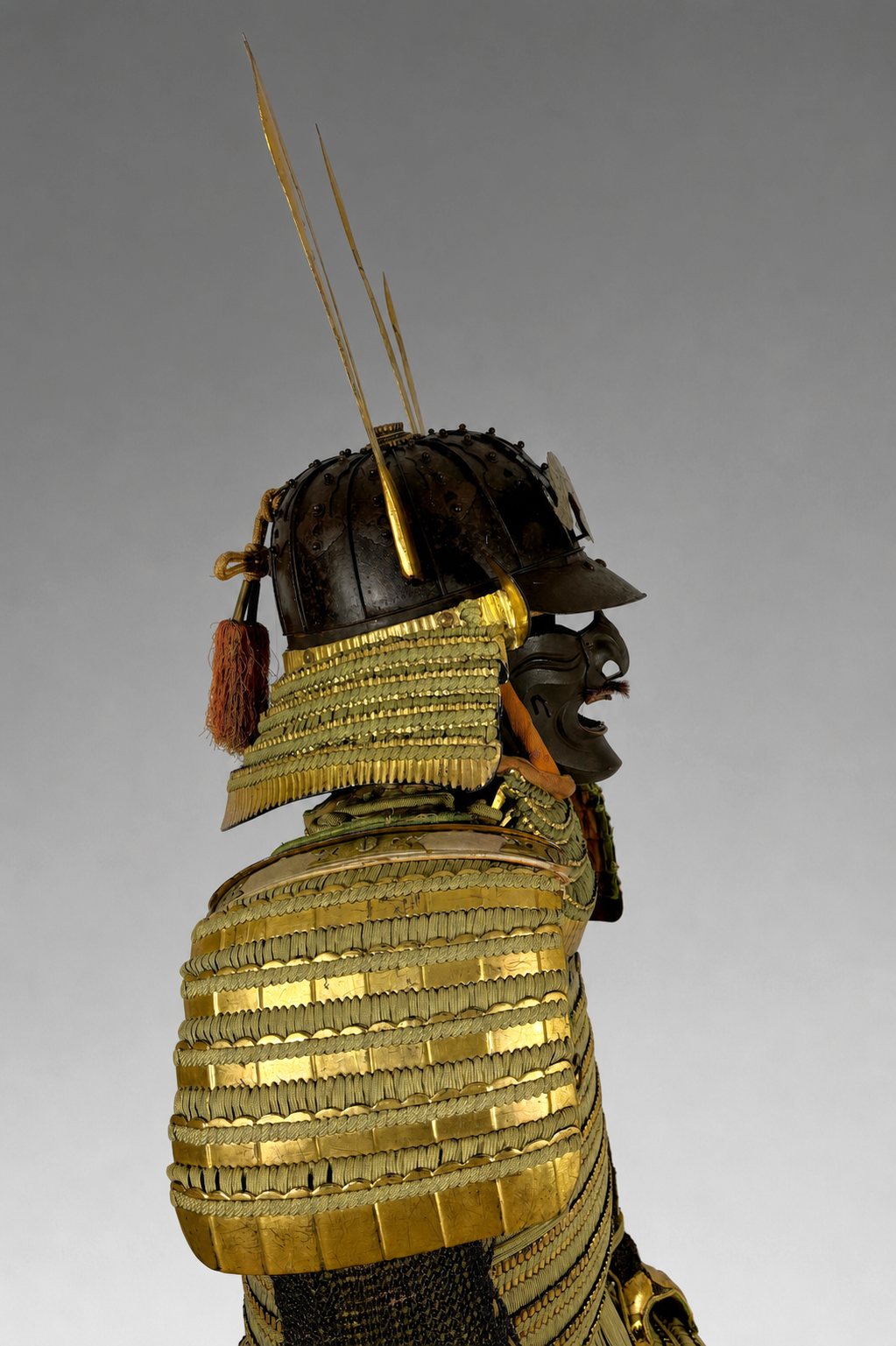
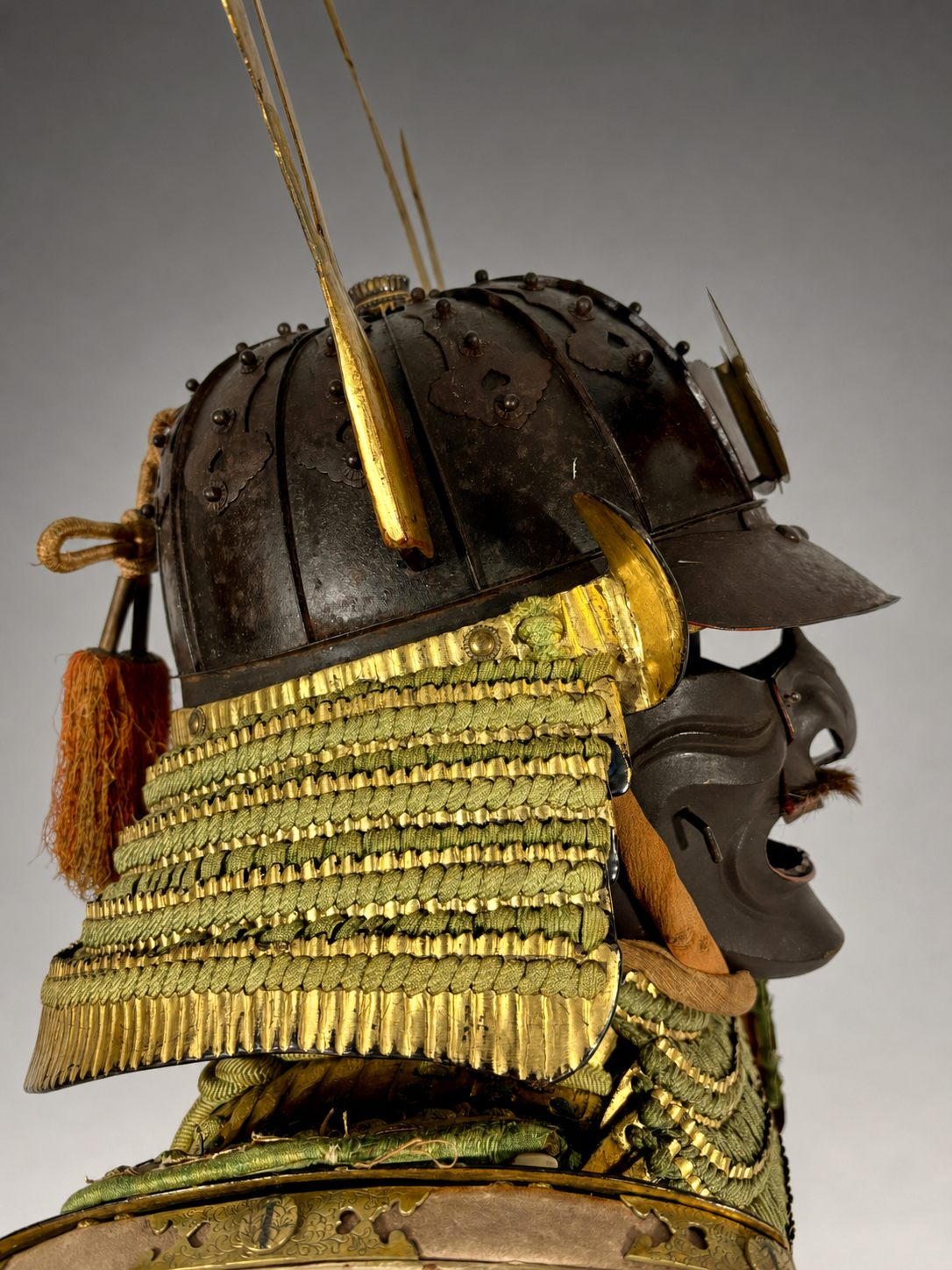
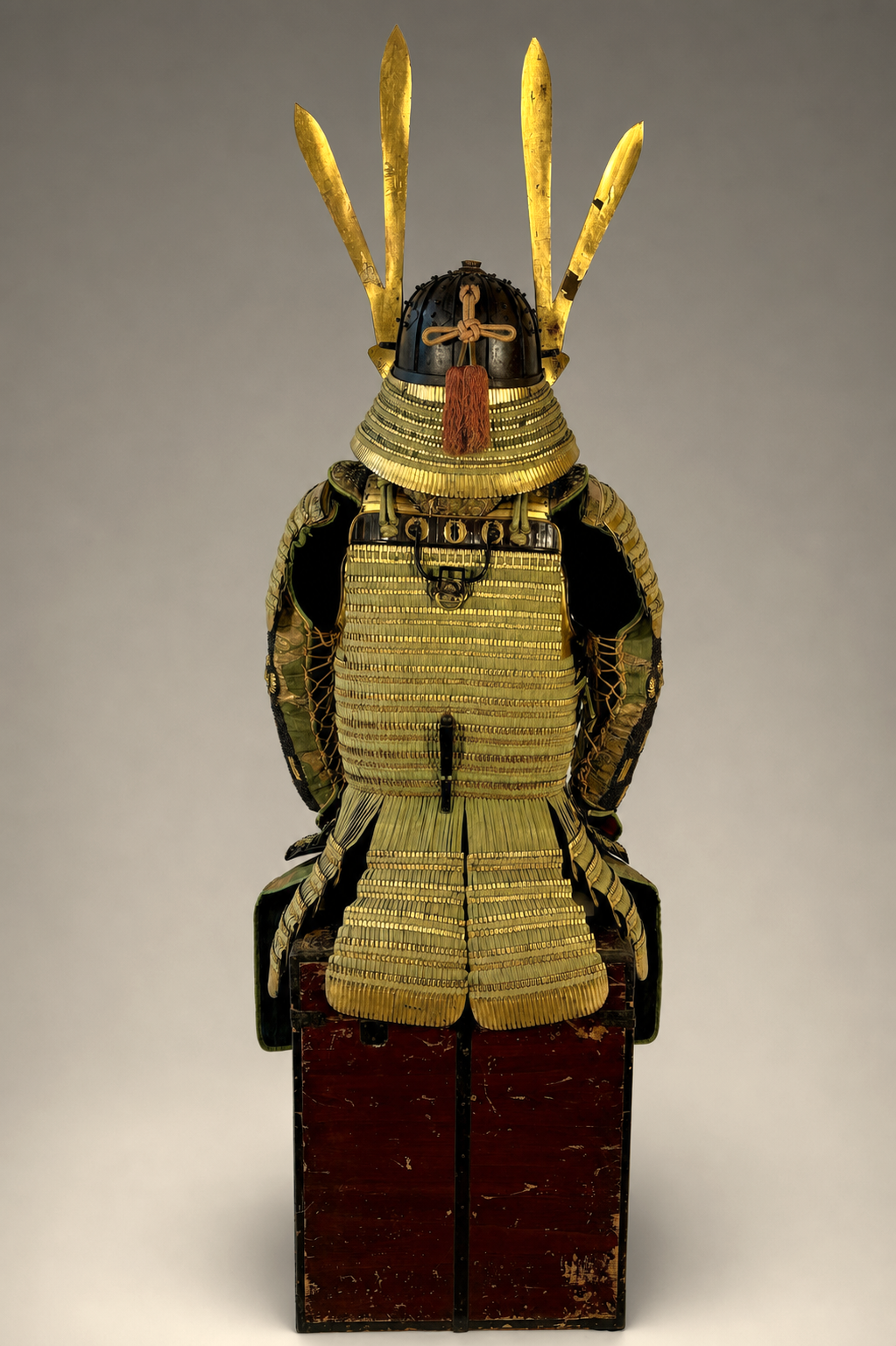
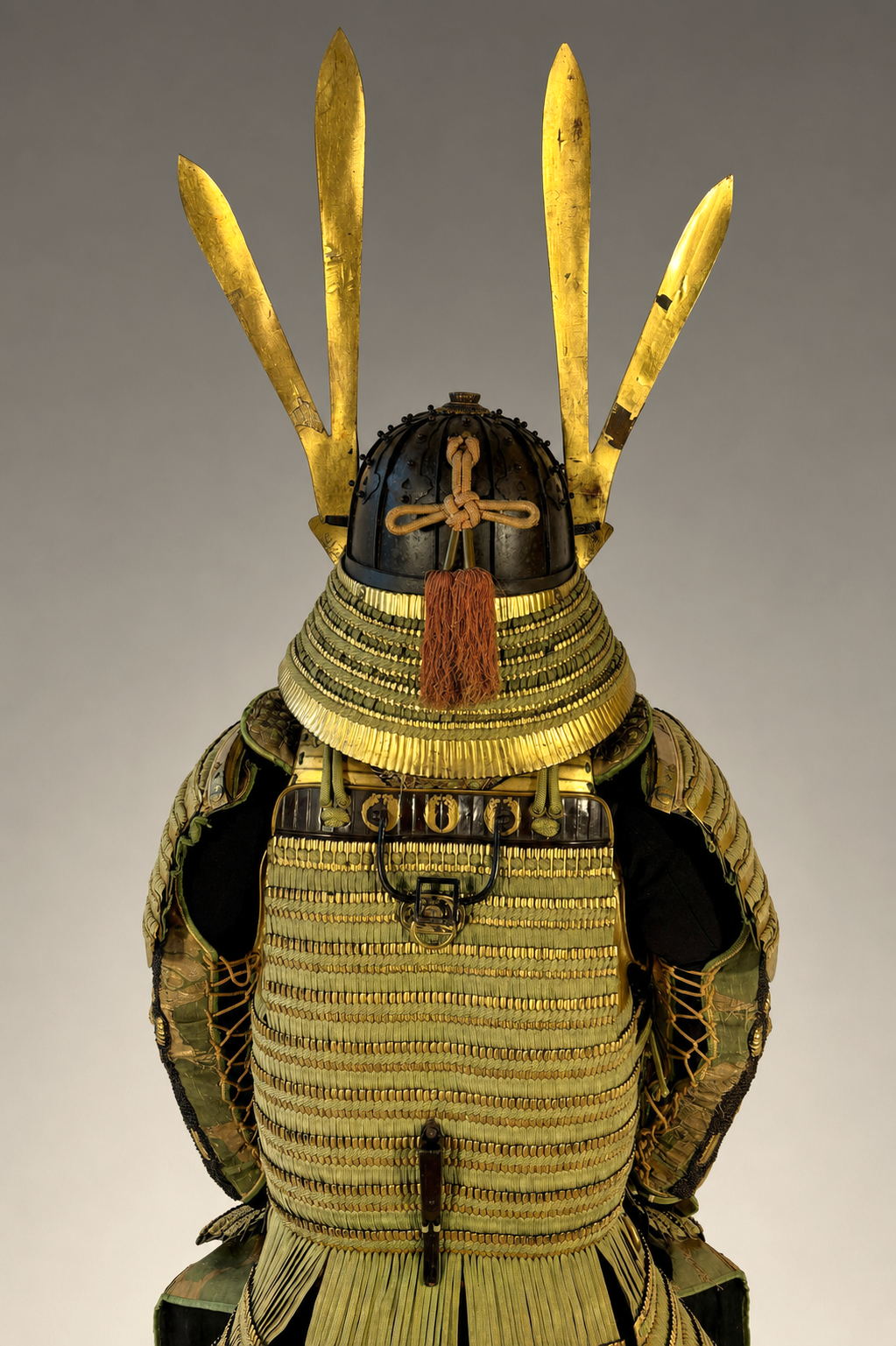
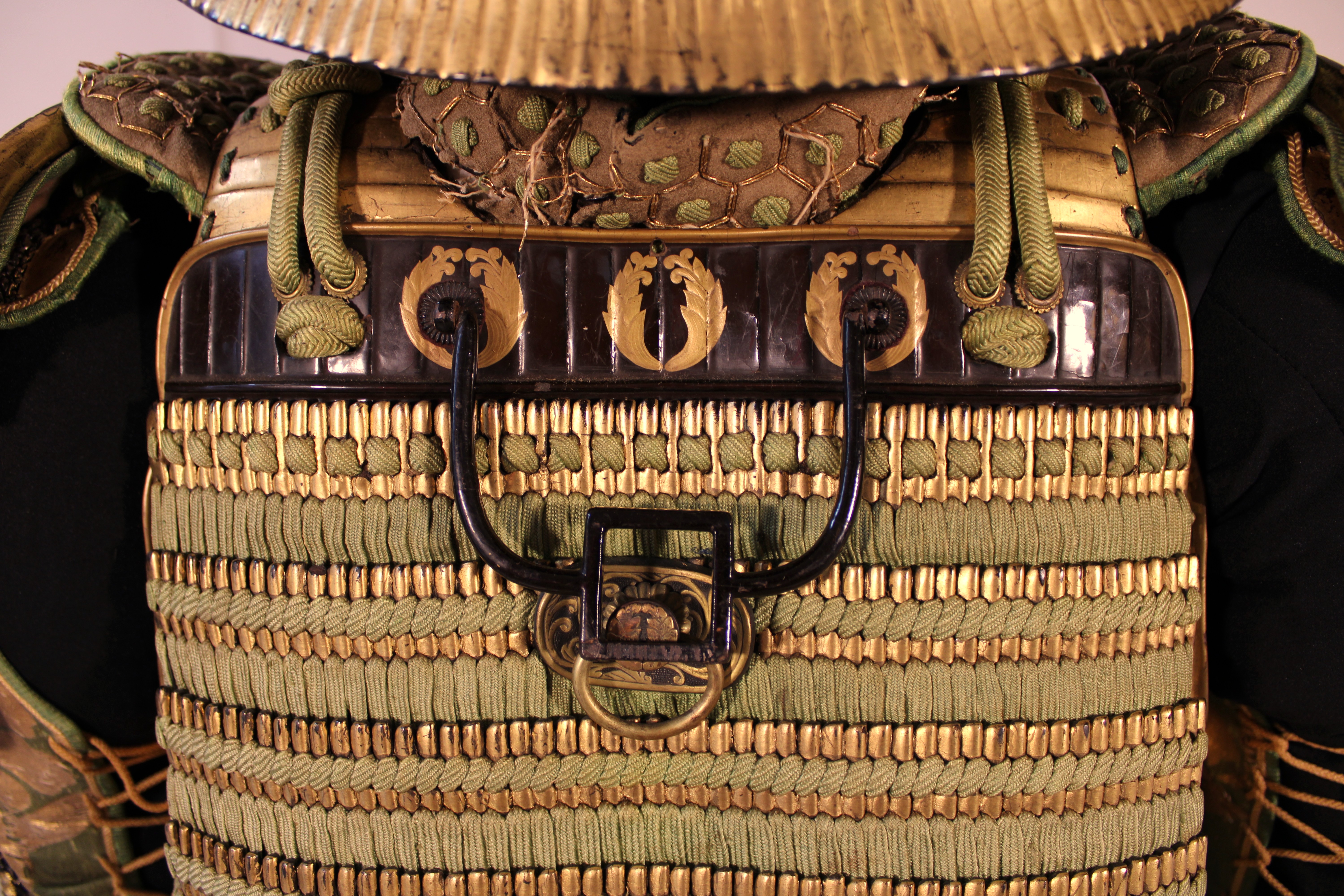
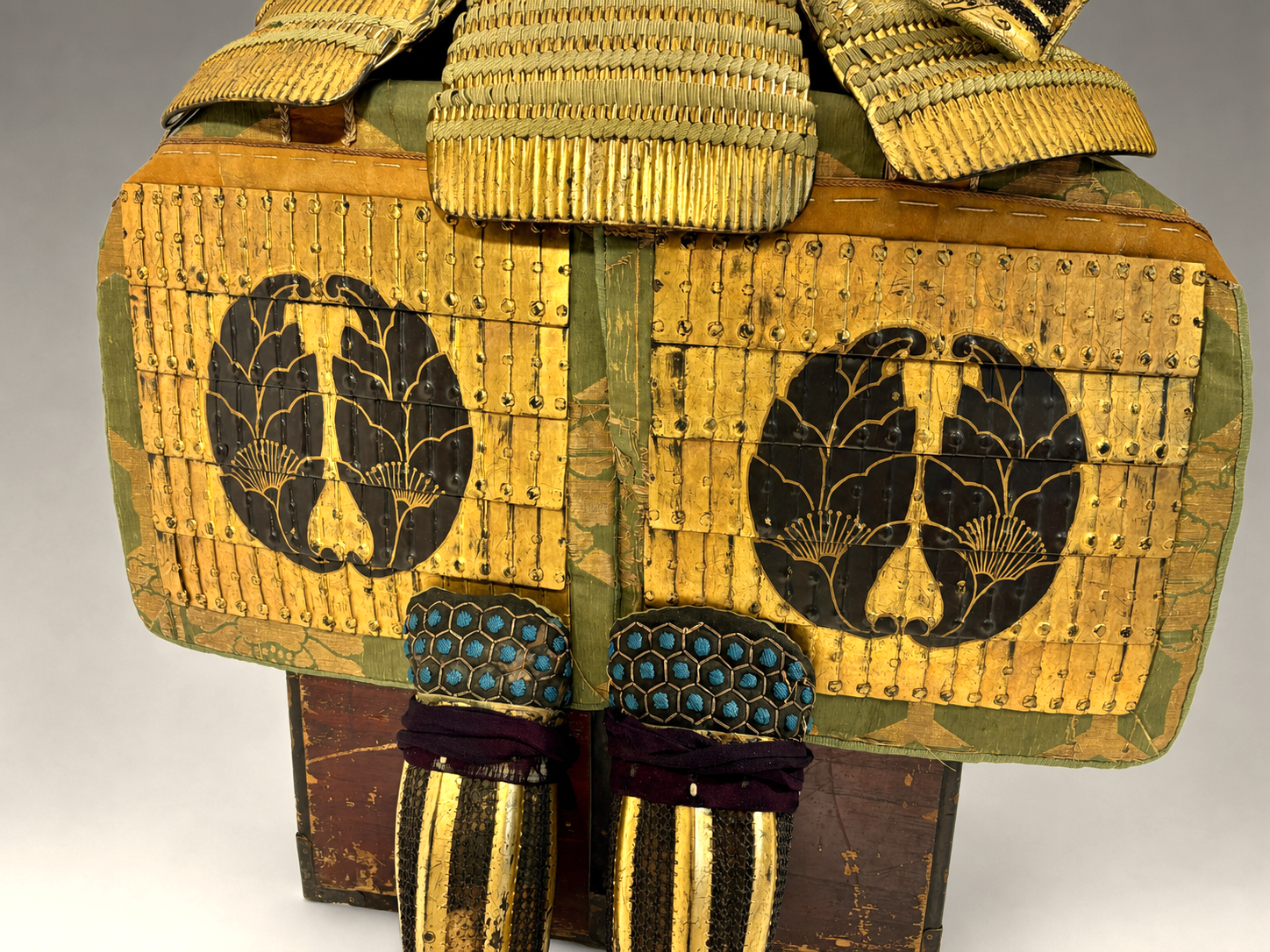
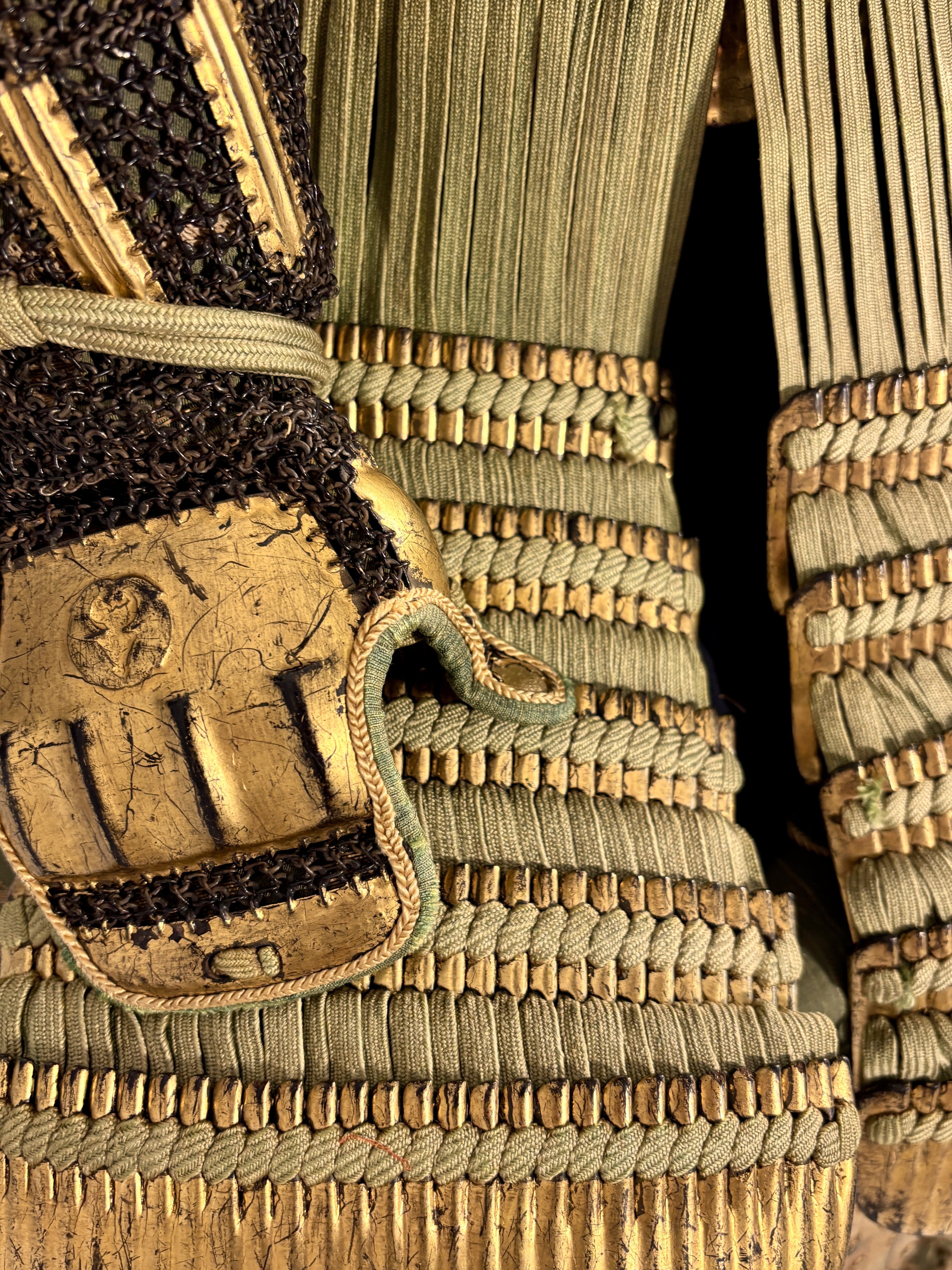
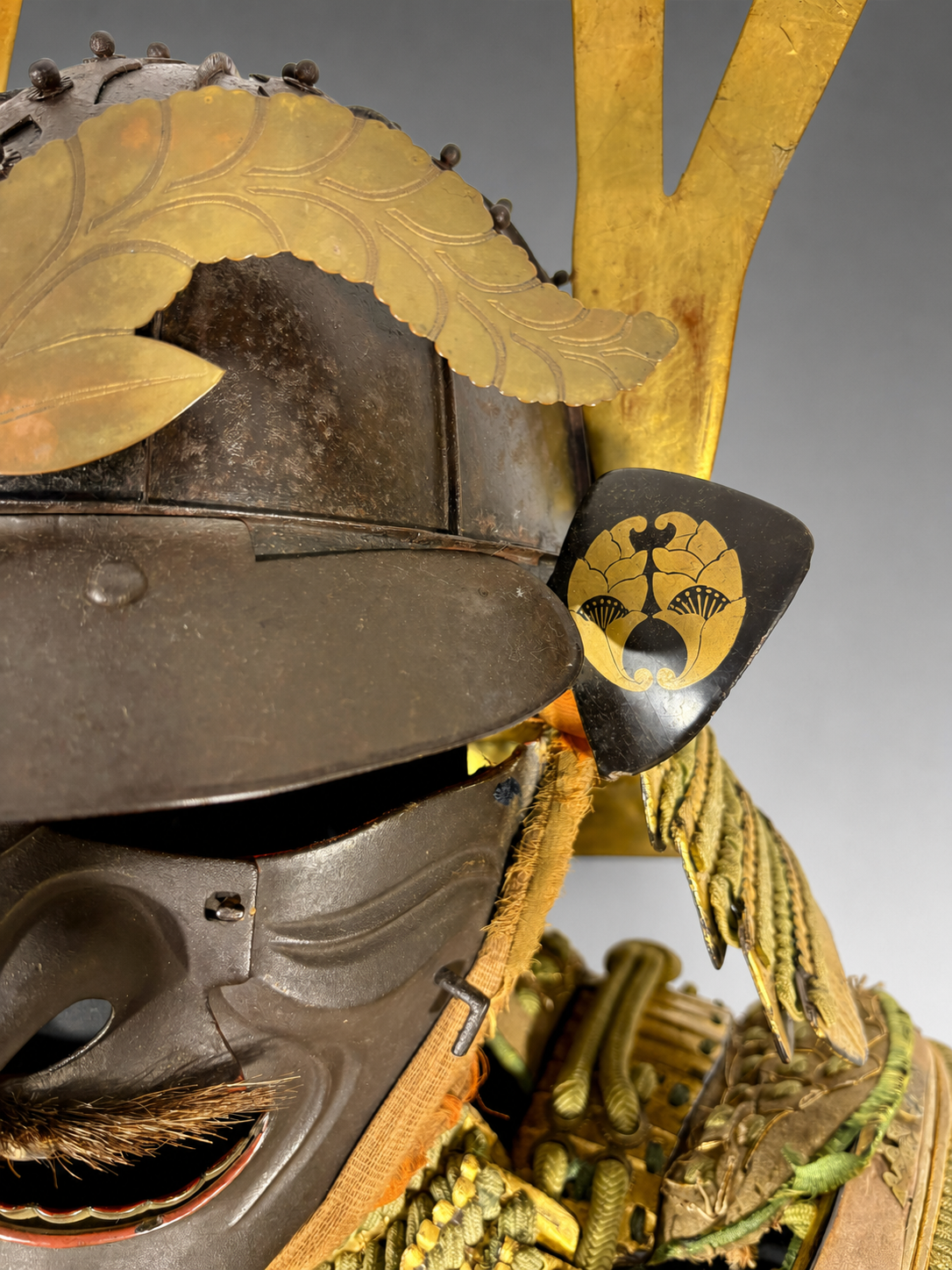
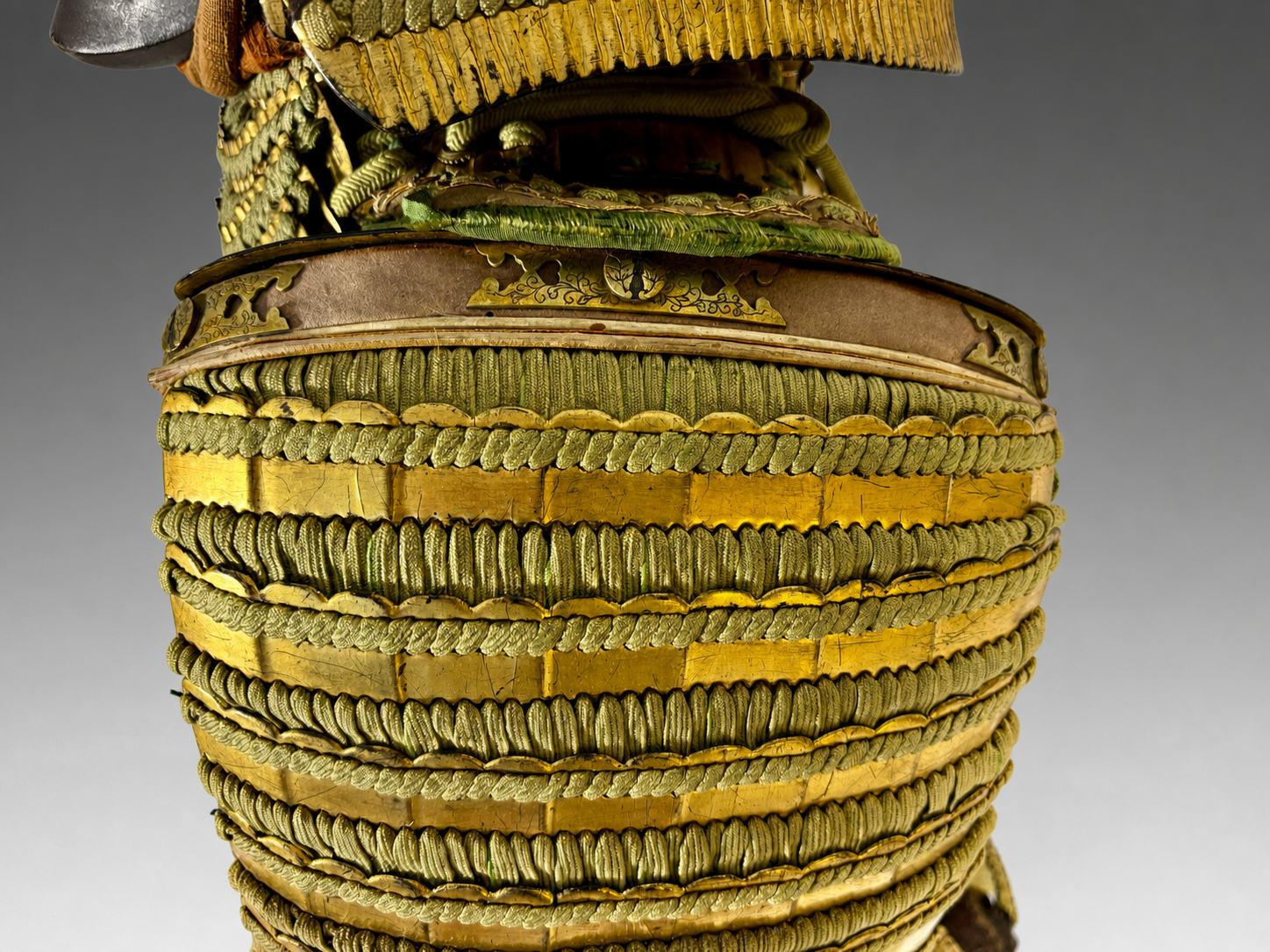
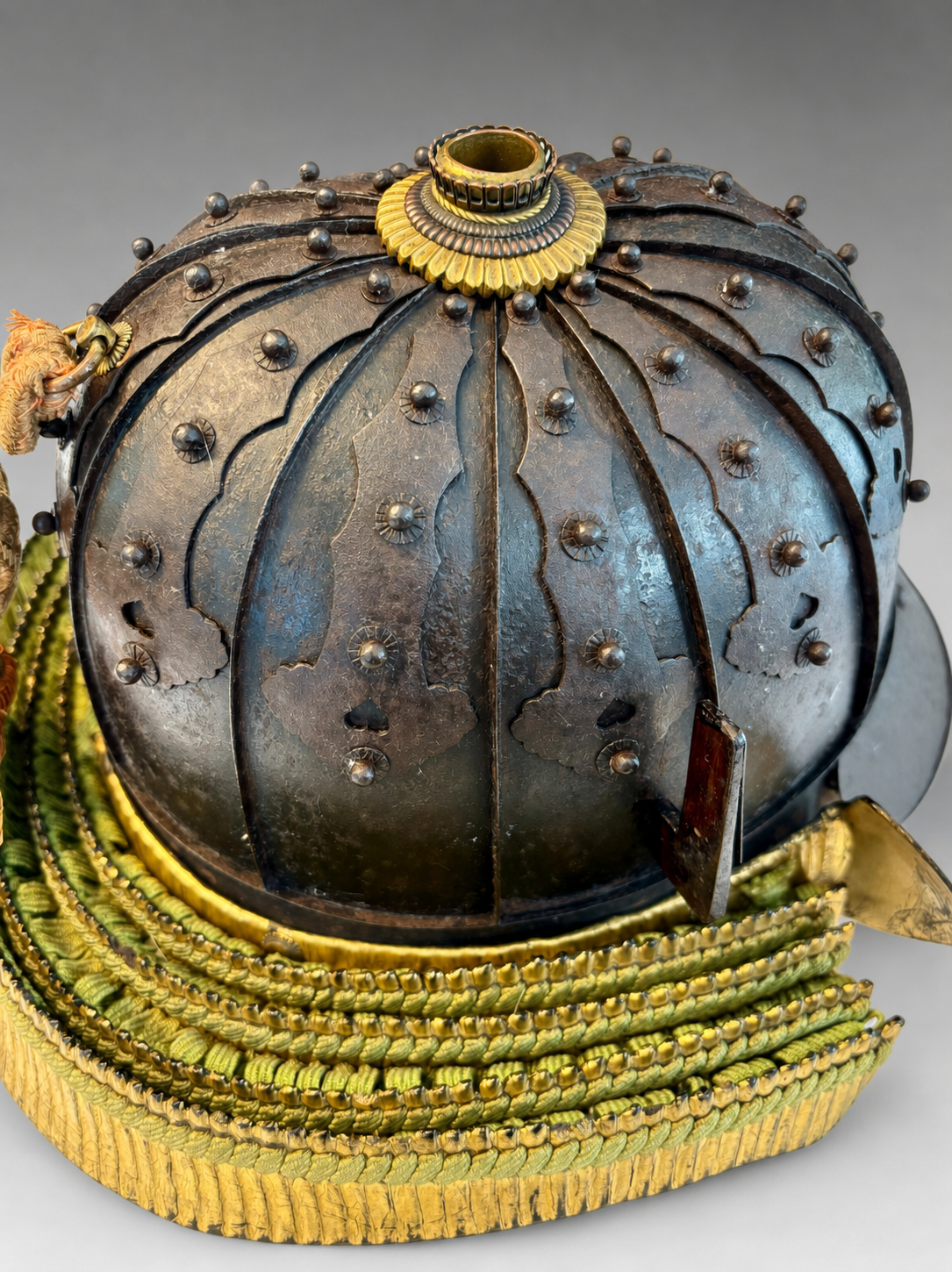
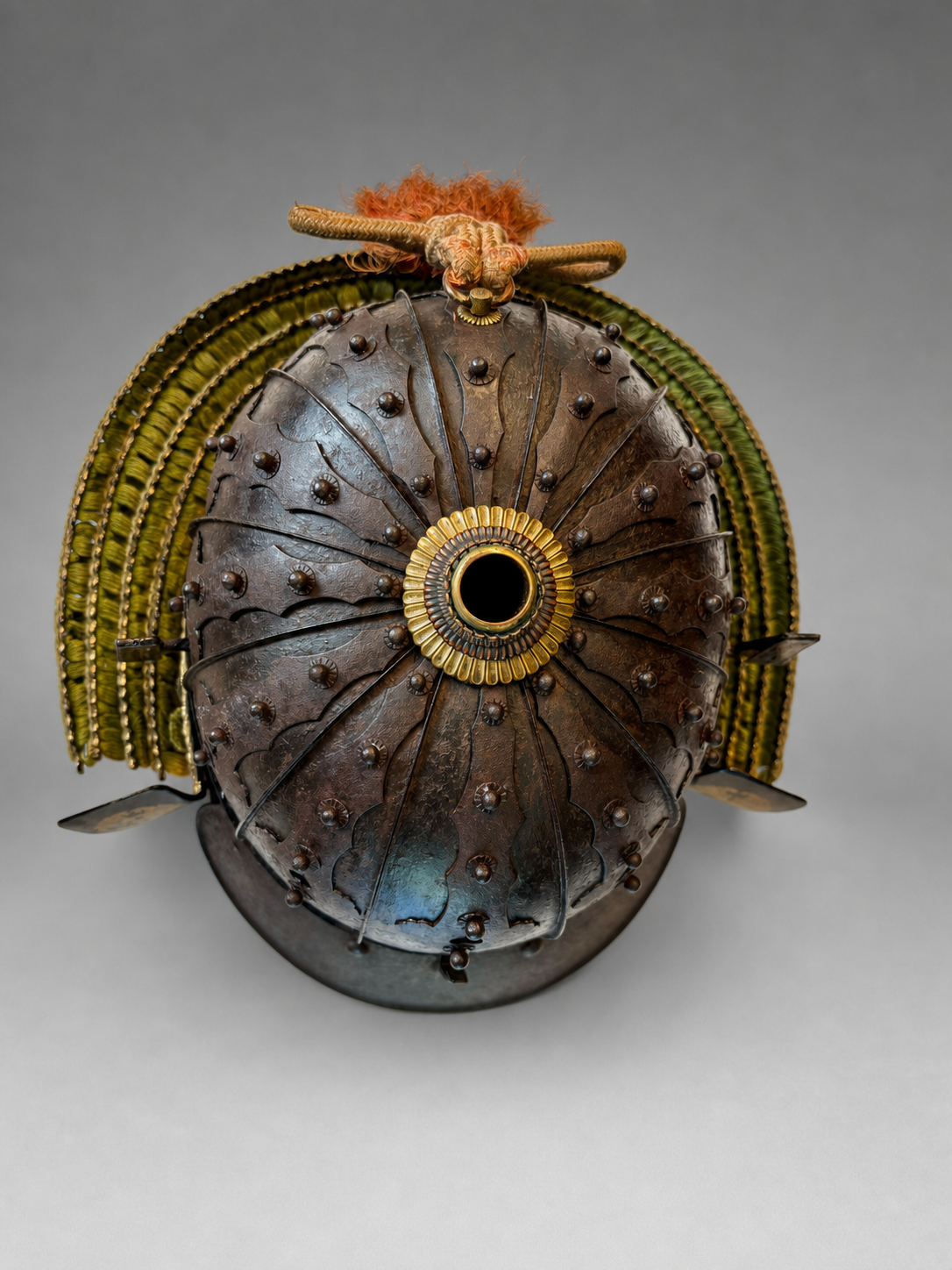
An elaborate suit of armour in the kin-kozane midori-iro odoshi ni-mai-dō gusoku style
Early Edo period (1603–1868), approximately the mid-seventeenth century.
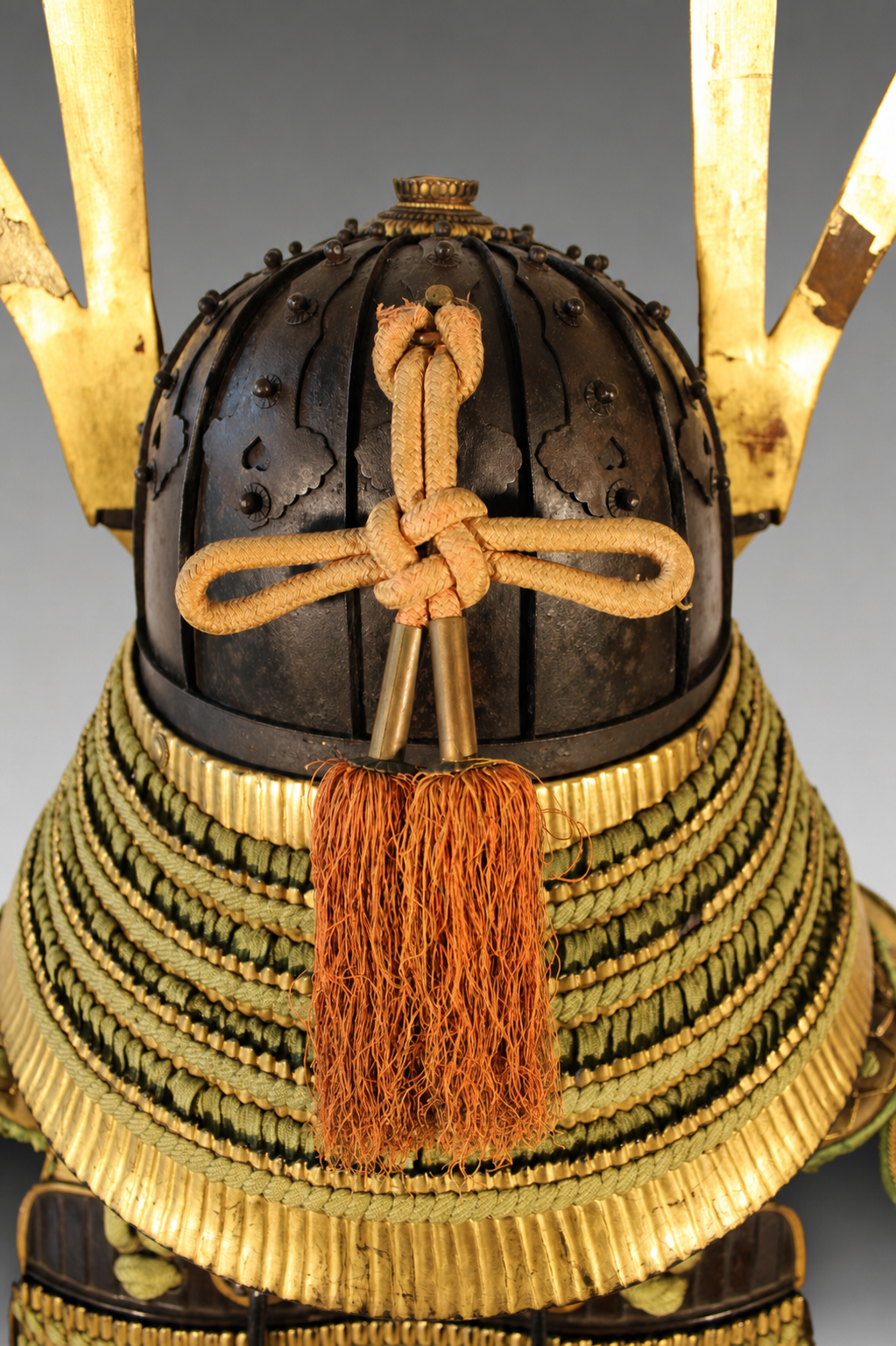
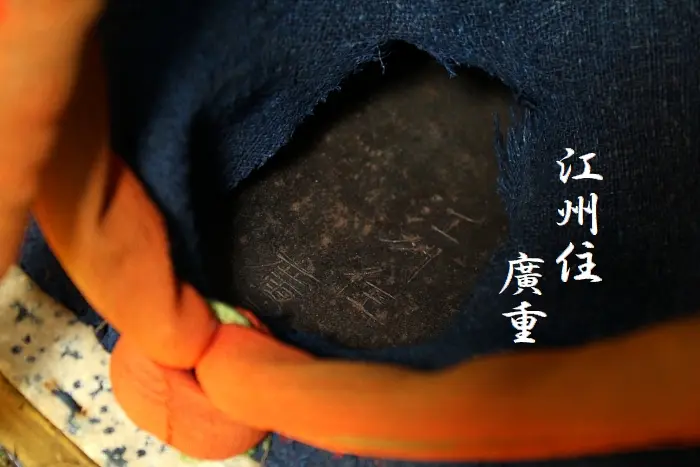
The twelve-plate hoshi-bachi kabuto, signed “Gōshū-jū Hiroshige” (江州住広重; Haruta school), has iron reinforcing shinodare on each plate. Its rivets have almost spherical heads, giving the helmet a striking appearance. At the back of the bowl is a kasa-jirushi no kan ring with a decorative agemaki tassel. The bowl and visor (mabizashi) have a sabiji finish and a fine patina. The fukigaeshi have been relacquered in black kuro-nuri and bear Nabeshima clan crests (kamon) executed in gold maki-e. The finely made tehen kanamono combines several metals and rises prominently above the bowl.
The neck guard (shikoro) consists of four gilded, fluted lames laced with pale green braid. The front crest (maedate) takes the form of wisteria (fuji), while gilded side ornaments (wakidate) complete the helmet.
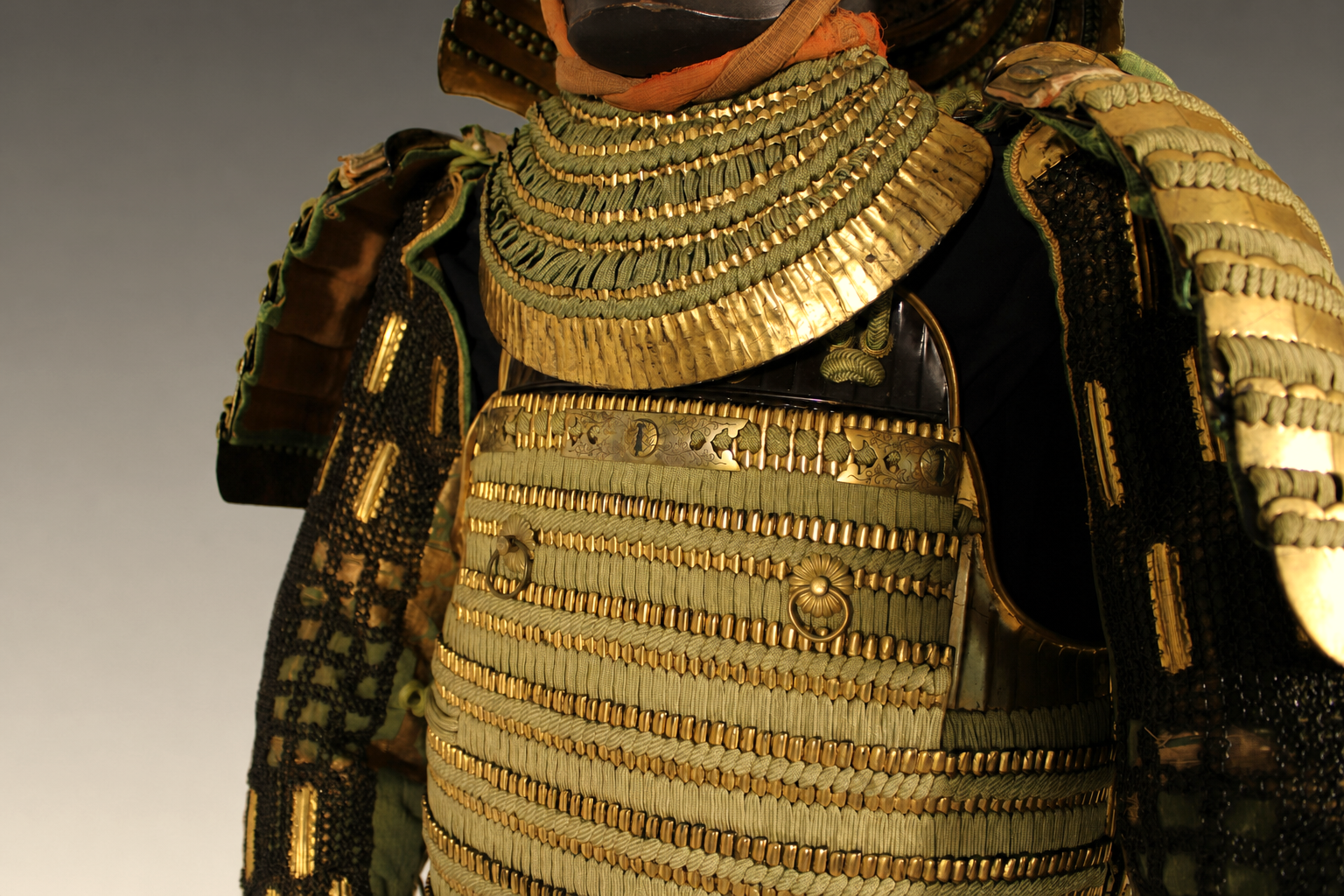
The throat guard (tare) and tōsei-sode shoulder guards are likewise made of gilded, fluted lames laced with pea-green odoshi-ito. Their brown sabimono lacquer finish imitates a refined rust patina. The face mask is in the ressei-bō style, with stylized wrinkles (shiwa), an animal-hair moustache and bared silver teeth. Its interior is lacquered in the customary vermilion red.
According to the Tōkō Meikan, the armourer Hiroshige most probably belonged to the Haruta school, which originated in Nara, and worked in Ōmi. The source describes this as the second of only two known helmets bearing his signature, making it particularly valuable for study.
The two-piece cuirass (ni-mai-dō) is made of small hon-kozane lamellae (“true kozane”), an older and more labour-intensive type of scale. These were later superseded by larger, more economical iyozane and by cuirasses of forms such as Yukinoshita-dō, yokohagi-dō and Nanban-dō. In this suit, the use of hon-kozane was therefore a costly archaism: according to period records, making armour of this kind could take an entire year. Its splendour is heightened by gilding with kinpun (gold dust) mixed into urushi lacquer. This was exceptionally expensive at the time and befitted a daimyō or someone of comparable rank.
The decorative metal edging (fukurin) is fire-gilded and finely chased. On the back is a sashimono-gattari fitting and an uke-zutsu socket for mounting a personal standard.
The sangu comprise armoured sleeves of the shino-kote type, haidate thigh guards bearing the Nabeshima clan crest, and shino-suneate shin guards. All are gilded to harmonize with the rest of the armour. These pieces are lined with green brocade in a kikkō (“tortoiseshell”) pattern that complements the pea-green lacing. The haidate lining also features peonies (botan). The kikkō brigandine at the top of the shin guards is stitched in vivid turquoise blue, enlivening the ensemble.
The fluted, gilded kusazuri skirt guards are divided into eight sections.
Note
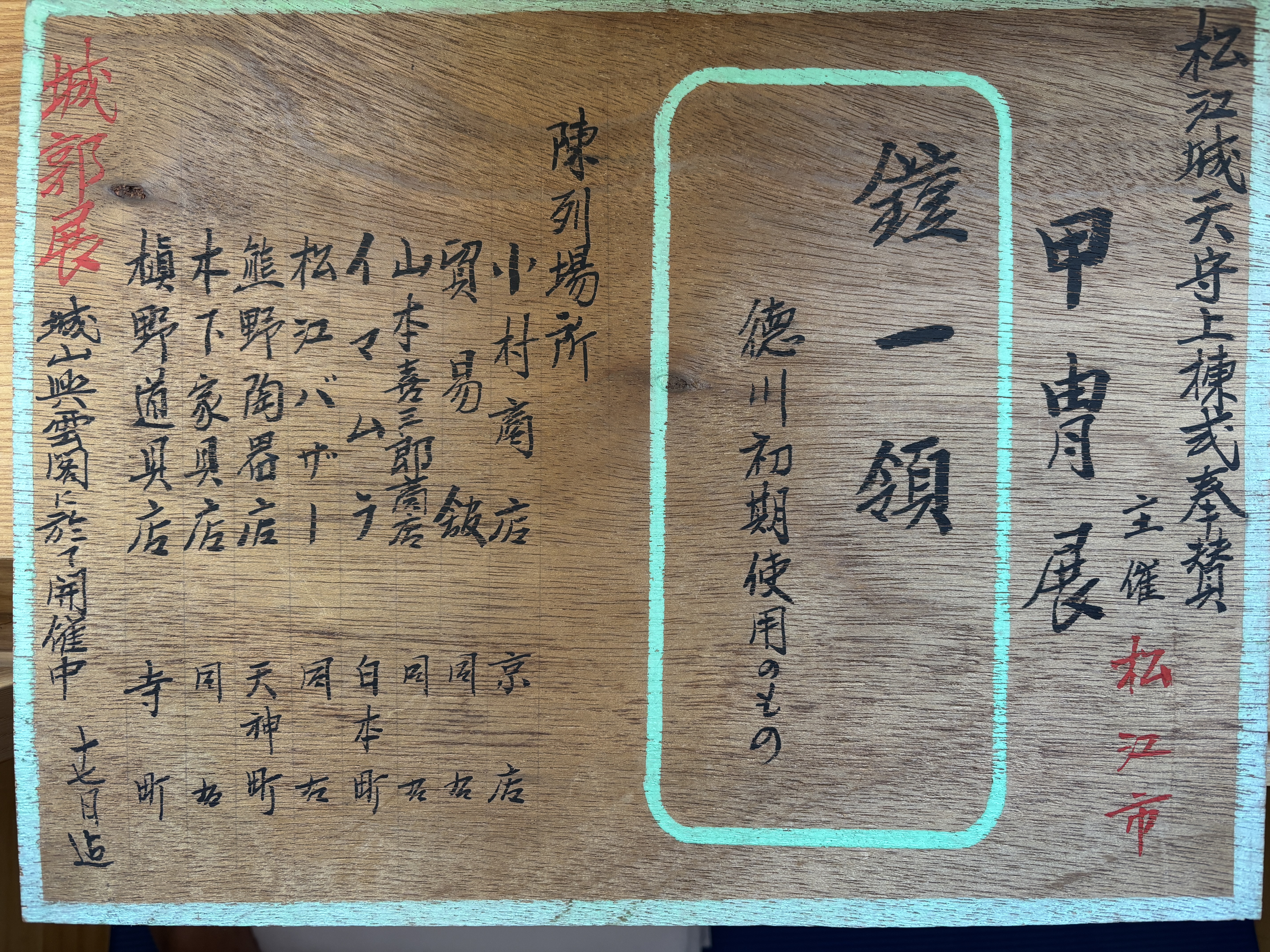
According to the source, the armour was exhibited in the tenshukaku, the main keep of Matsue Castle, at a specialist armour exhibition (katchū-ten). Original labels and a calligraphic description on a wooden plaque are said to document its earlier display by antique dealers and to provide a record of its provenance.
The suit is exceptional, complete and in excellent condition, with Nabeshima clan crests appearing in several places.
Given its date, the armour may have been presented as a gift by Nabeshima Motoshige 鍋島元茂 (1602–1654), lord of the Ogi domain in Hizen Province. From 1638, Matsue was ruled by the Matsudaira family, beginning with Matsudaira Naomasa 松平直政 (1601–1666), a grandson of Tokugawa Ieyasu. In 1648, the principal Nabeshima line was granted the right to use the honorific surname Matsudaira, the original family name of the first Tokugawa shogun, Tokugawa Ieyasu 徳川家康 (1543–1616).
The Matsudaira of Matsue were an influential collateral branch of the Tokugawa family. The Gosanke were specifically the three Tokugawa houses of Owari, Kii and Mito. A gift of this kind could be considered in the context of relations among prominent daimyō families.
The price does not include shipping costs.
We are not just merchants. We are also guardians of cultural heritage.
Paid parking in the BCS building. Free parking available by arrangement. The history of Samurai Art began back in 1995. At its inception was an unwavering passion for the fascinating aesthetics and artisanal perfection of ancient Japan. This enthusiasm remains with us and motivates us to strive for the highest professional standards in our presentation of the material culture of the ancient samurai. Every sword or piece of armor in our collection is a unique, exceptional item with its own history. We collaborate with leading Japanese dealers and experts from prestigious Japanese organizations such as NBTHK and NTHK. We guarantee the authenticity and declared quality of all our gallery exhibits.
For serious buyers, we offer private viewings at our showroom in Prague.
By appointment only.
Nádražní 896/30, Prague 5
Schedule a meetingStories, Discoveries, and the Life of the Gallery