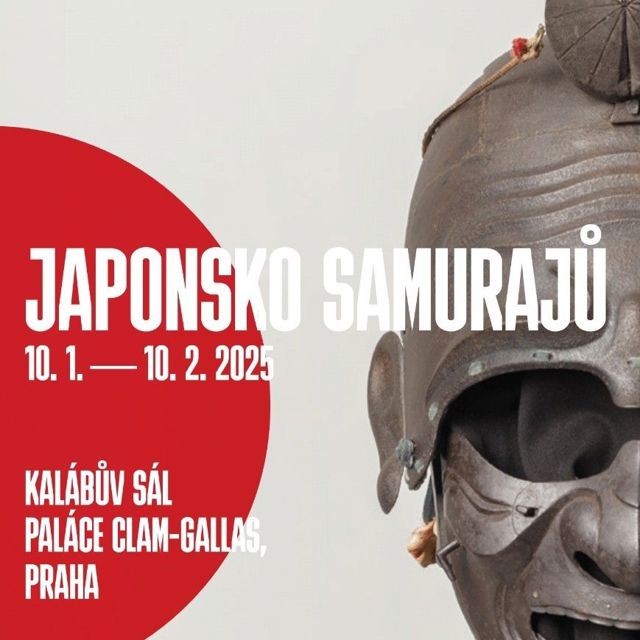
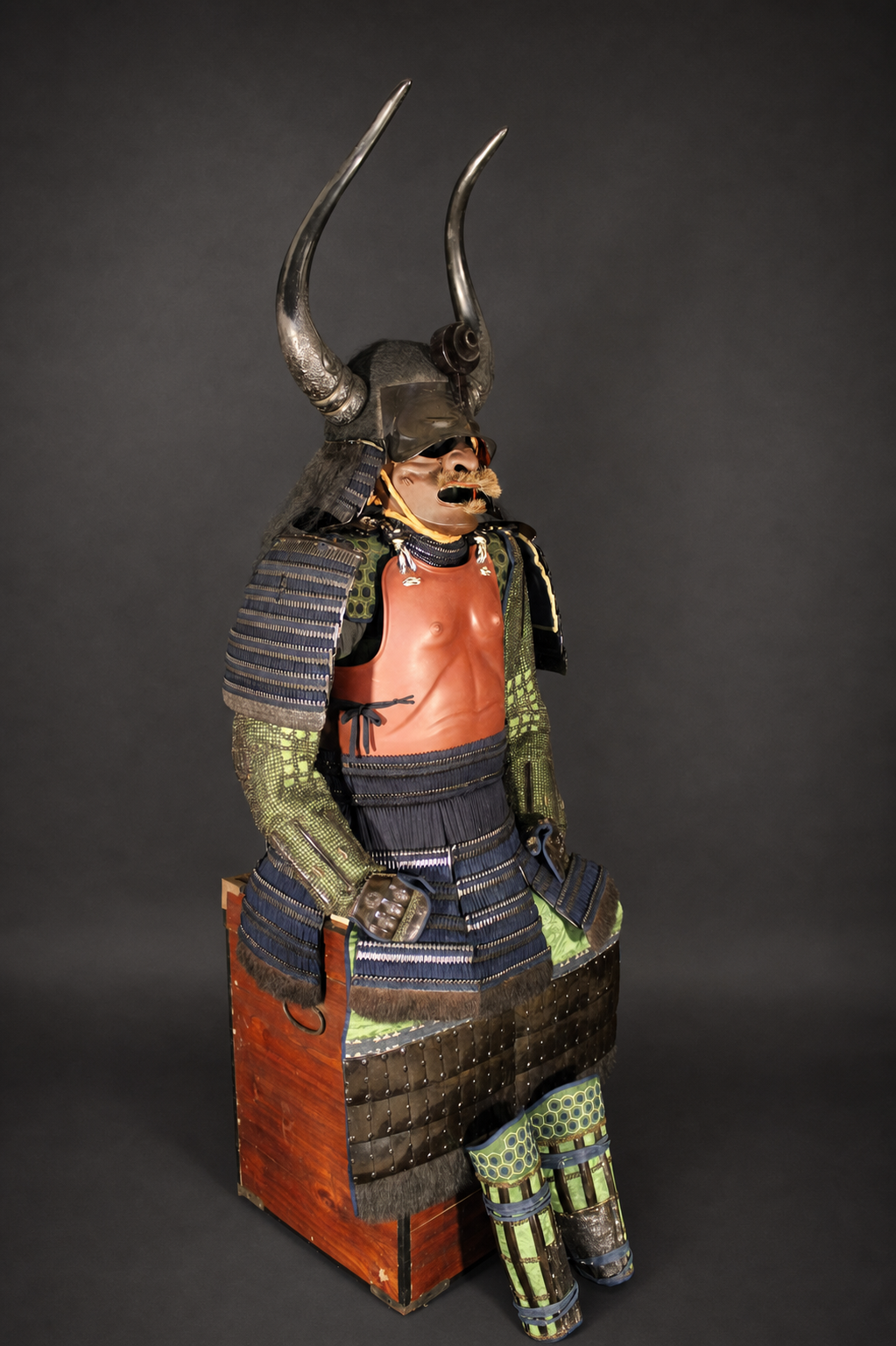
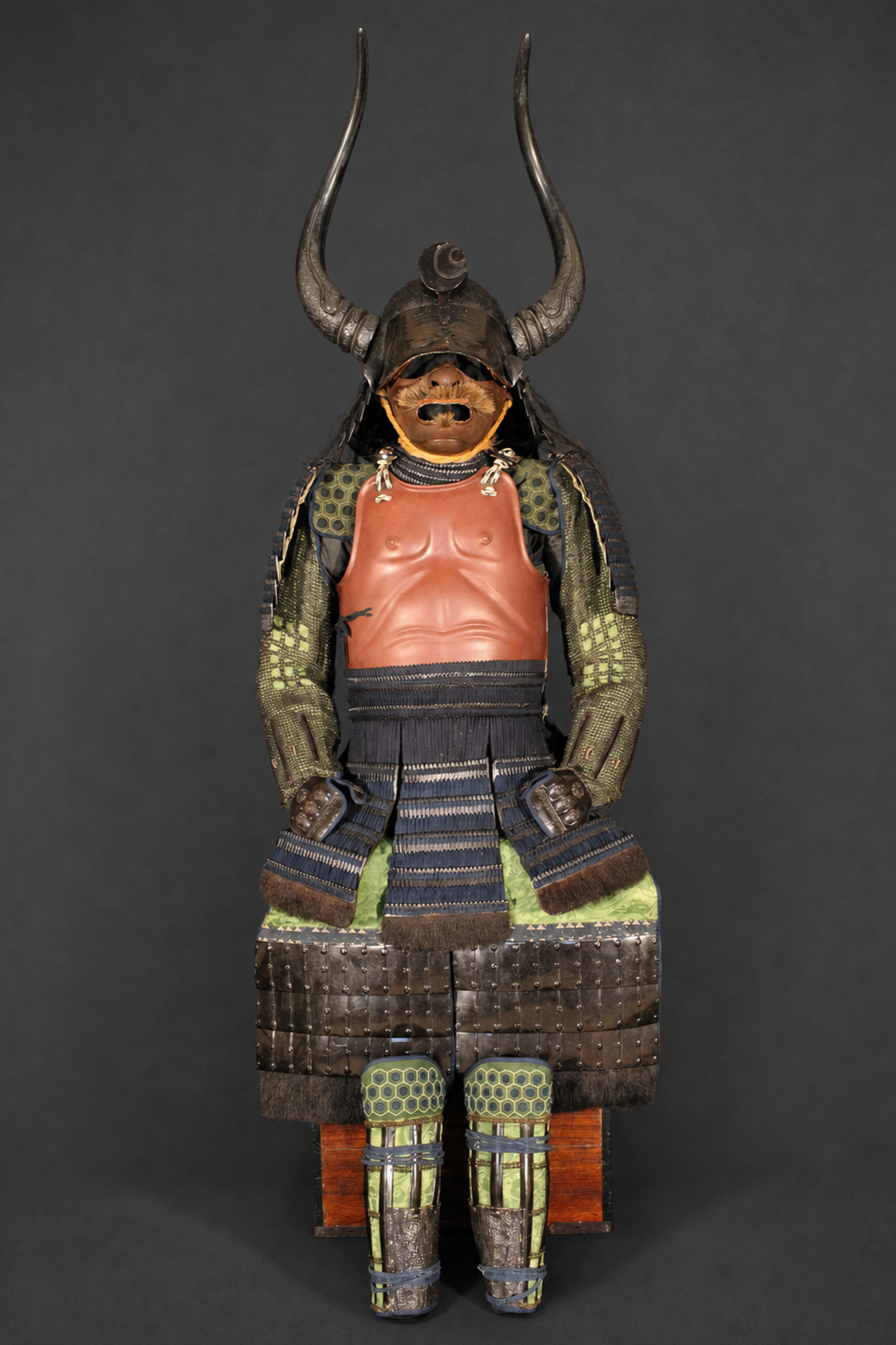
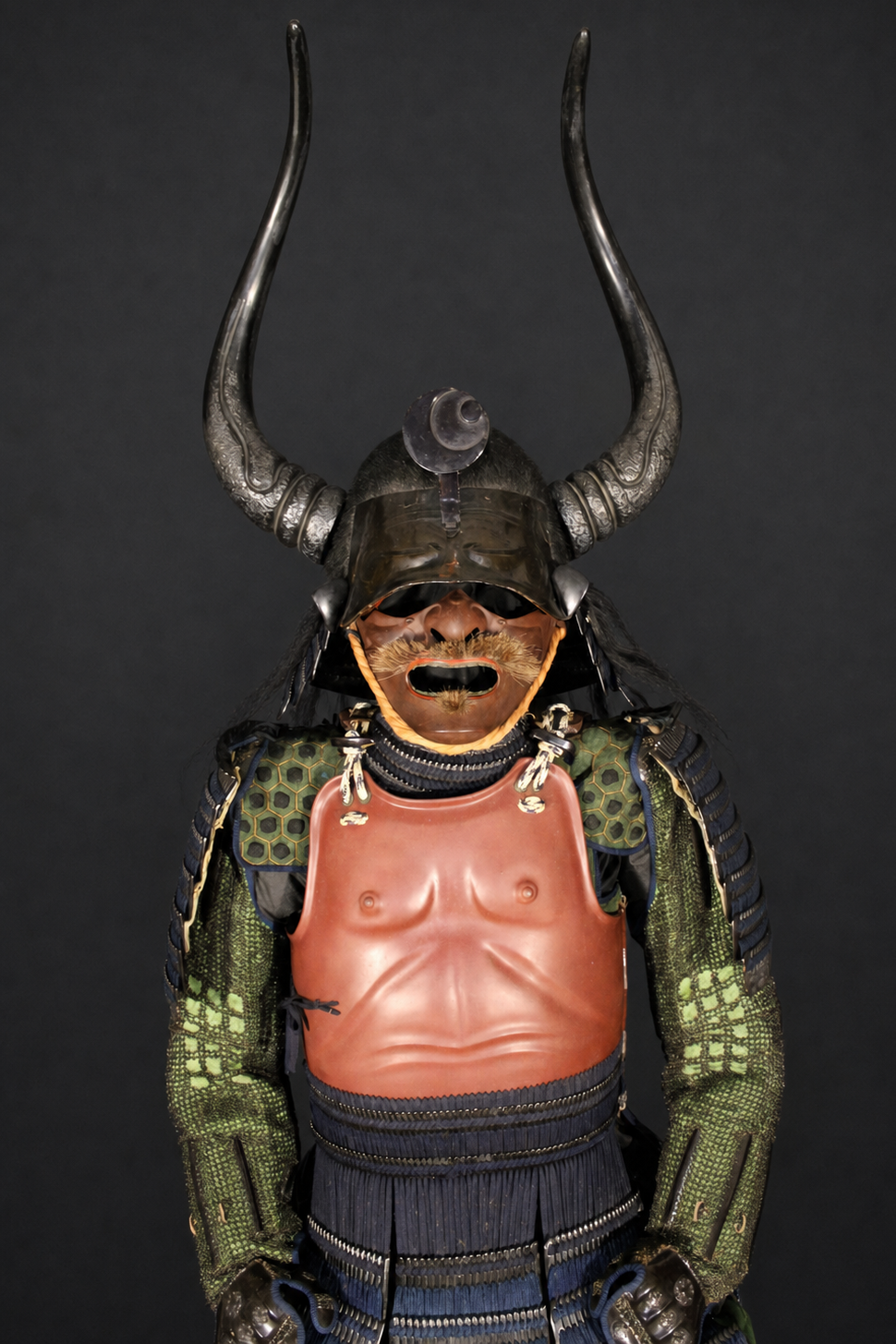
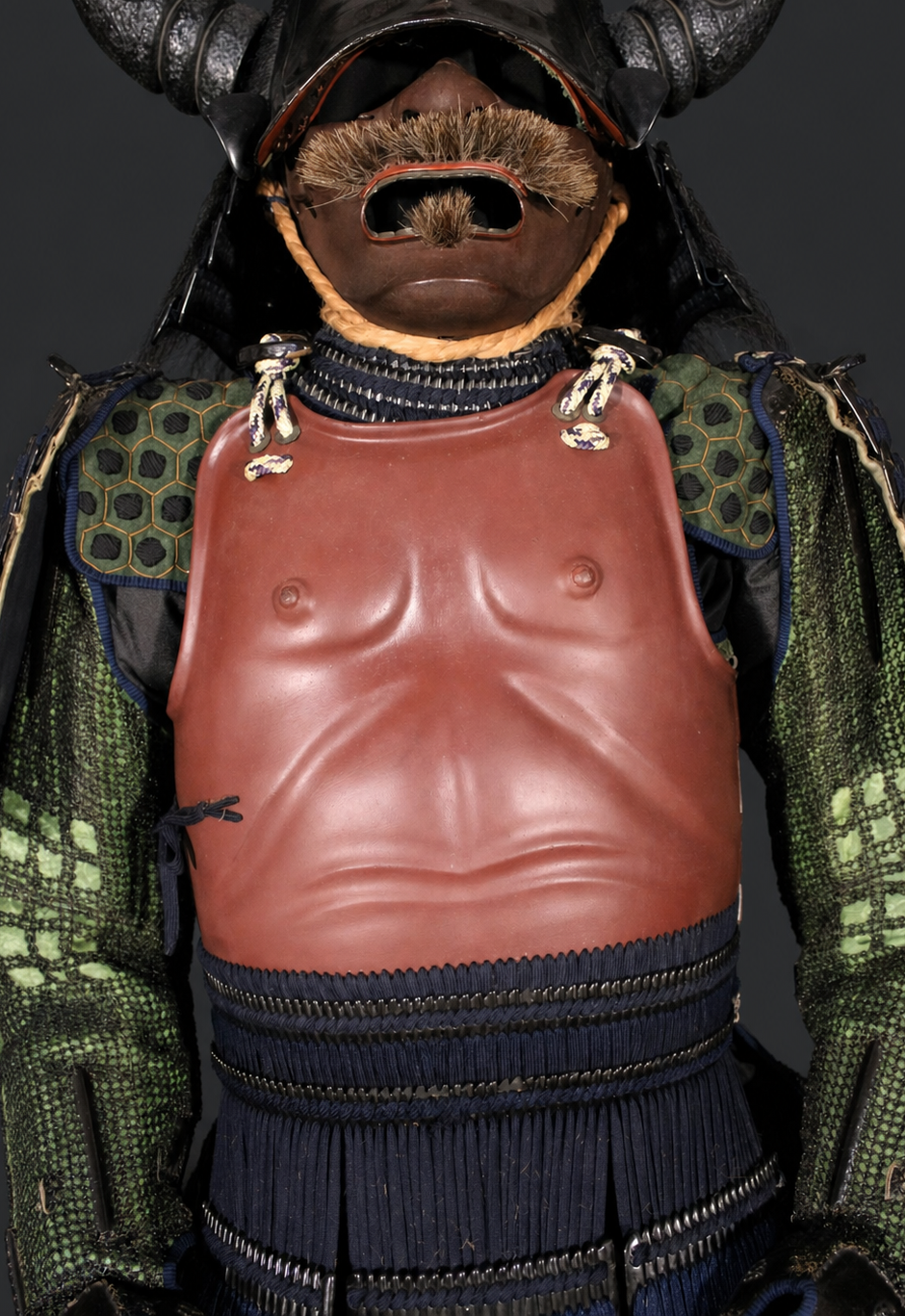
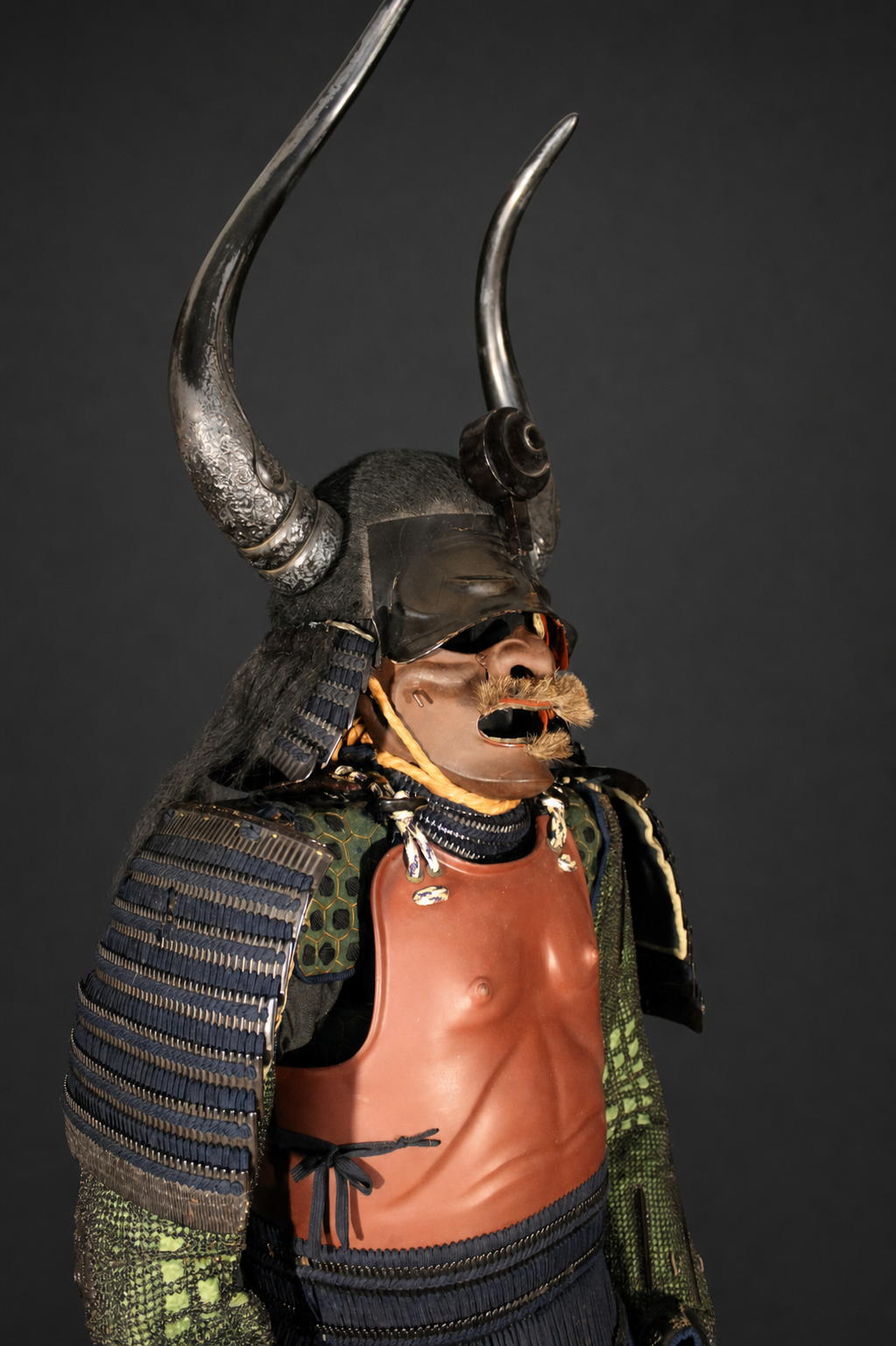
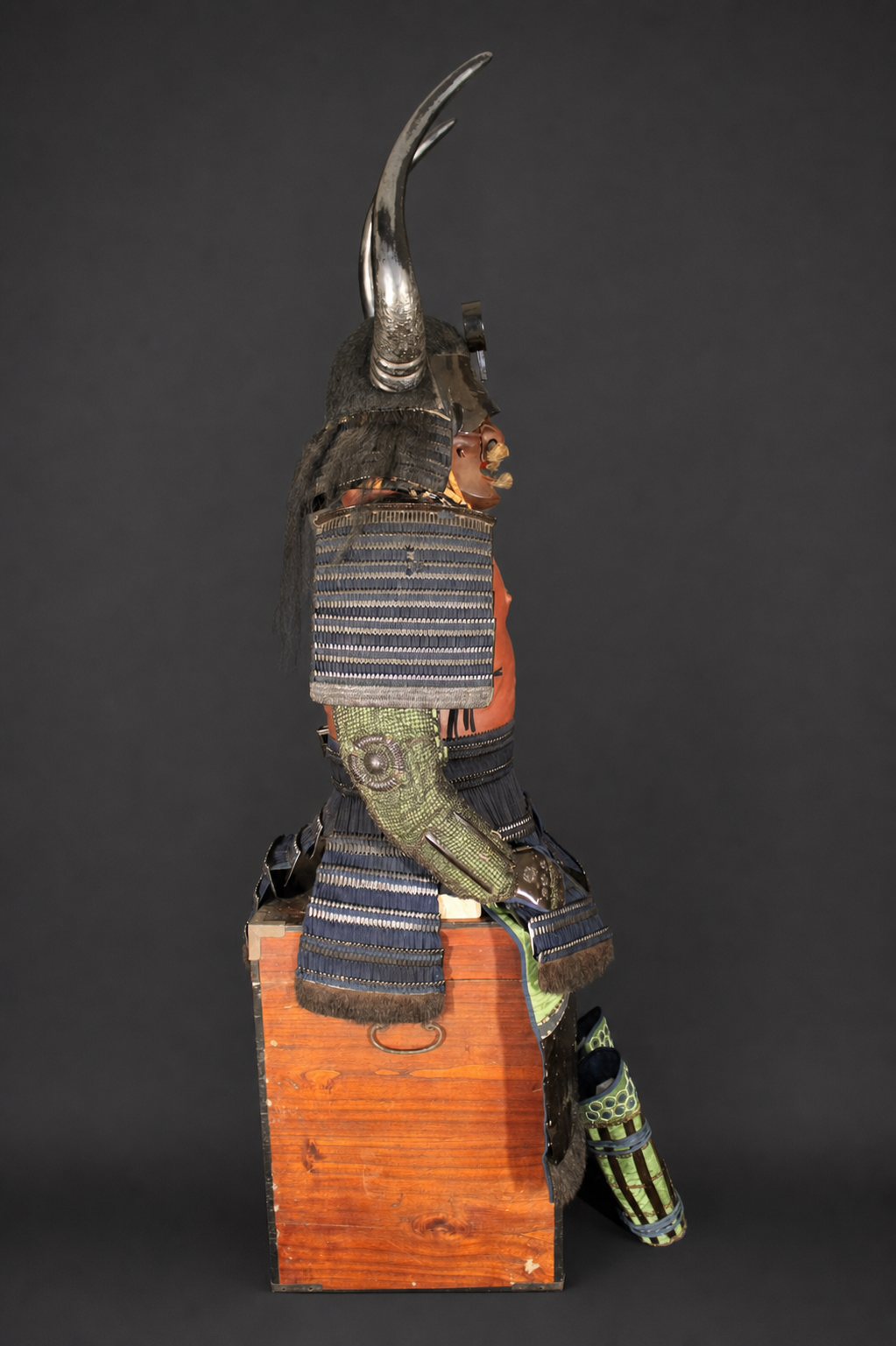
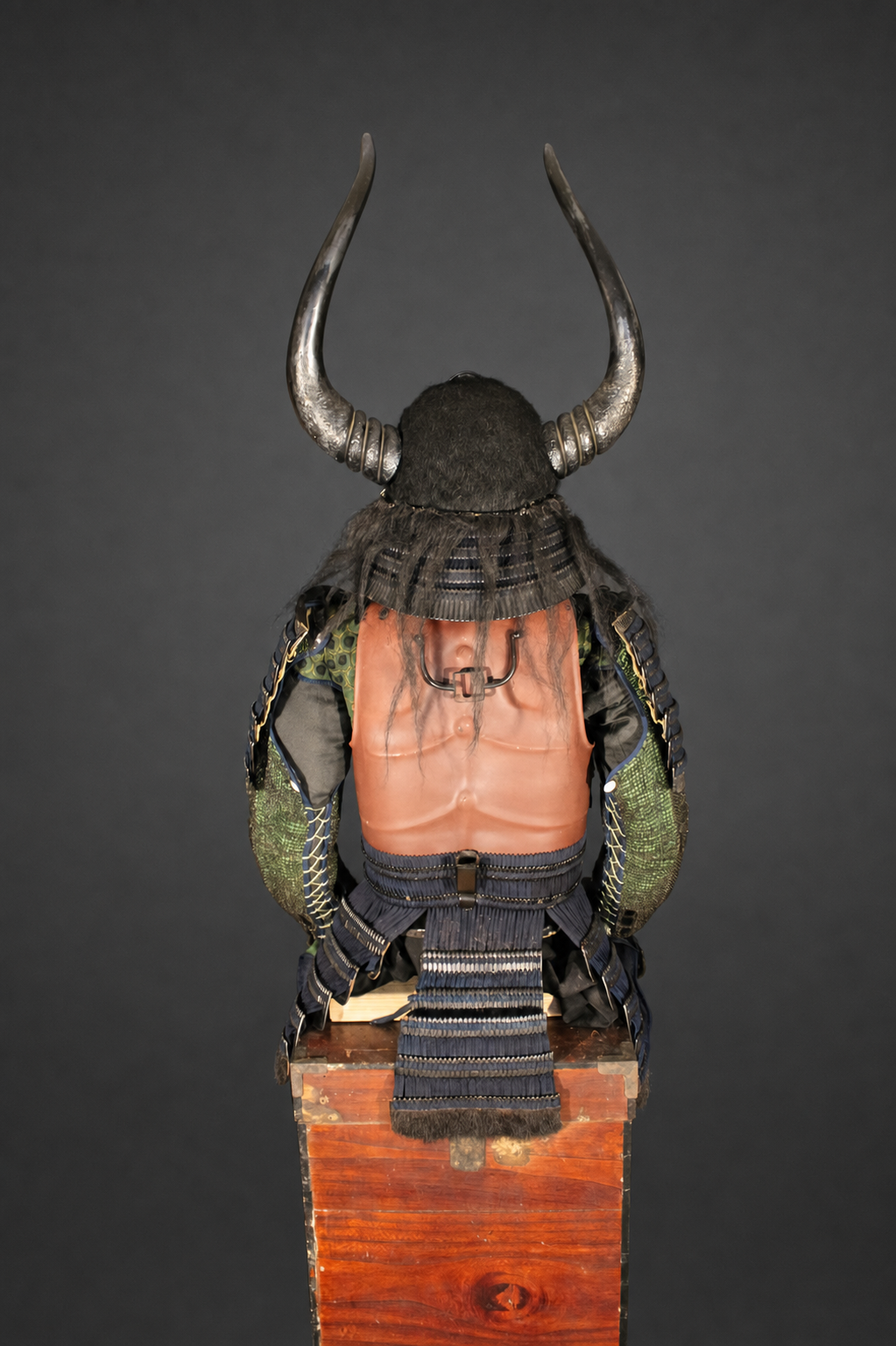
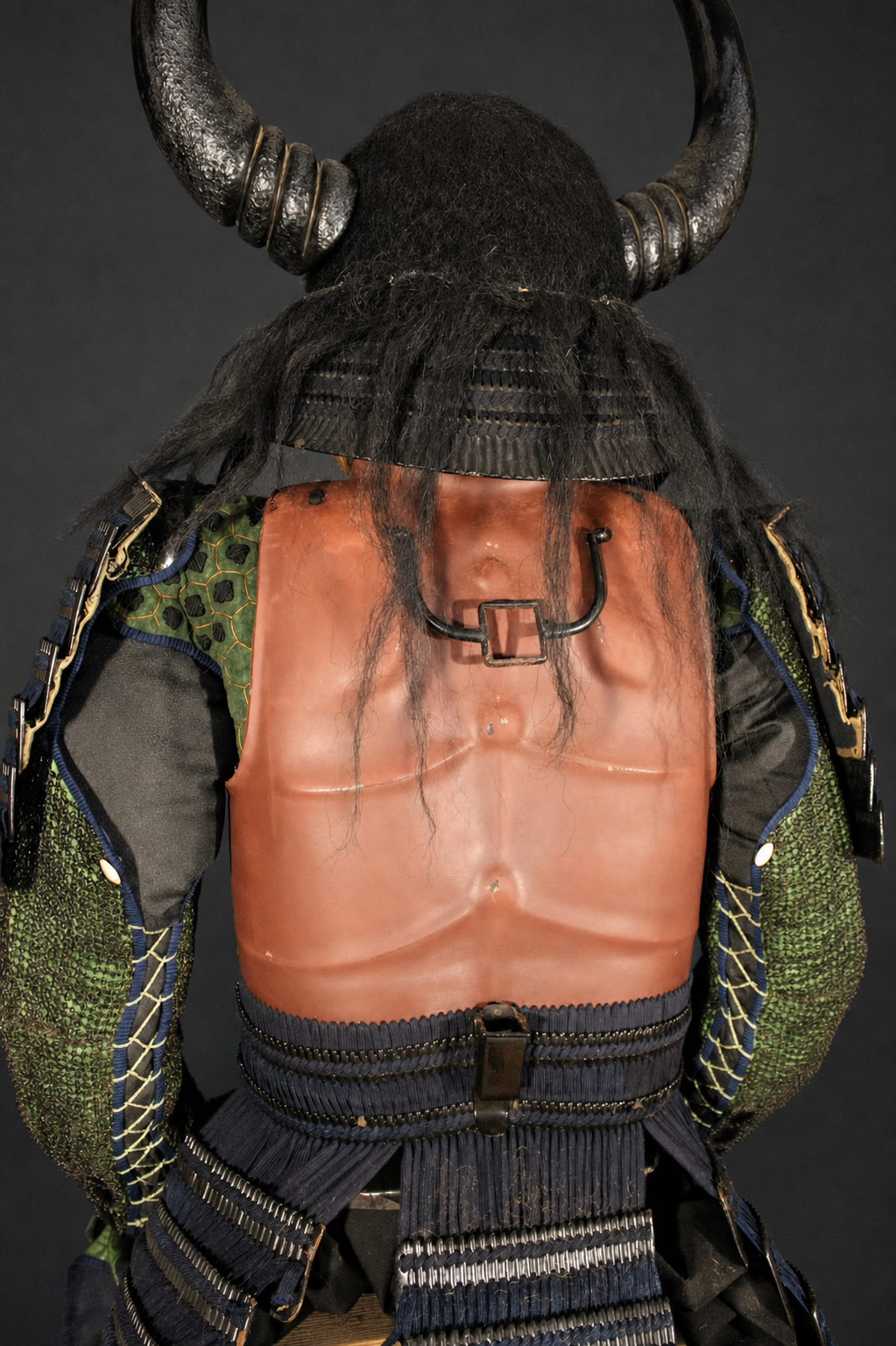
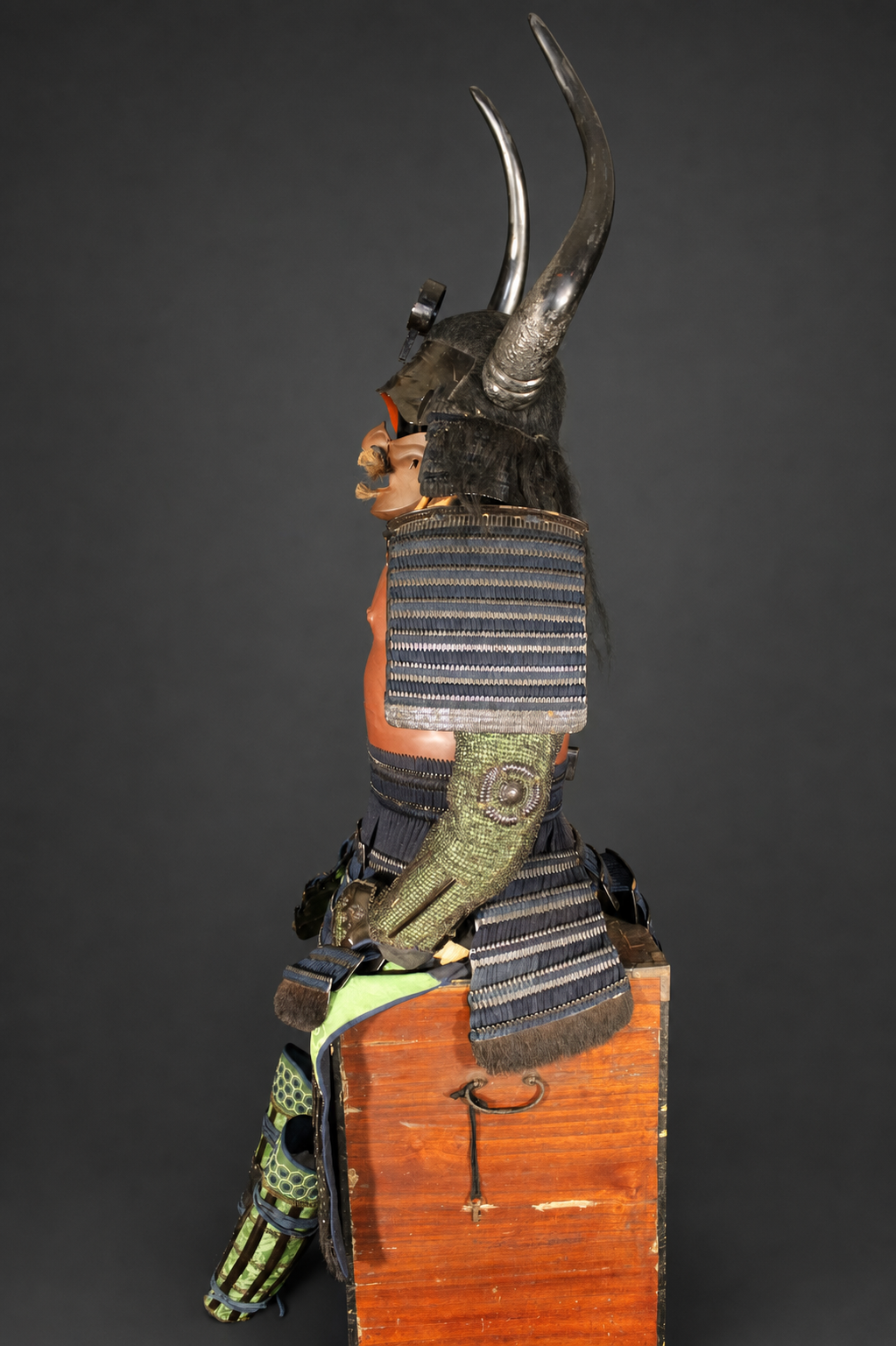
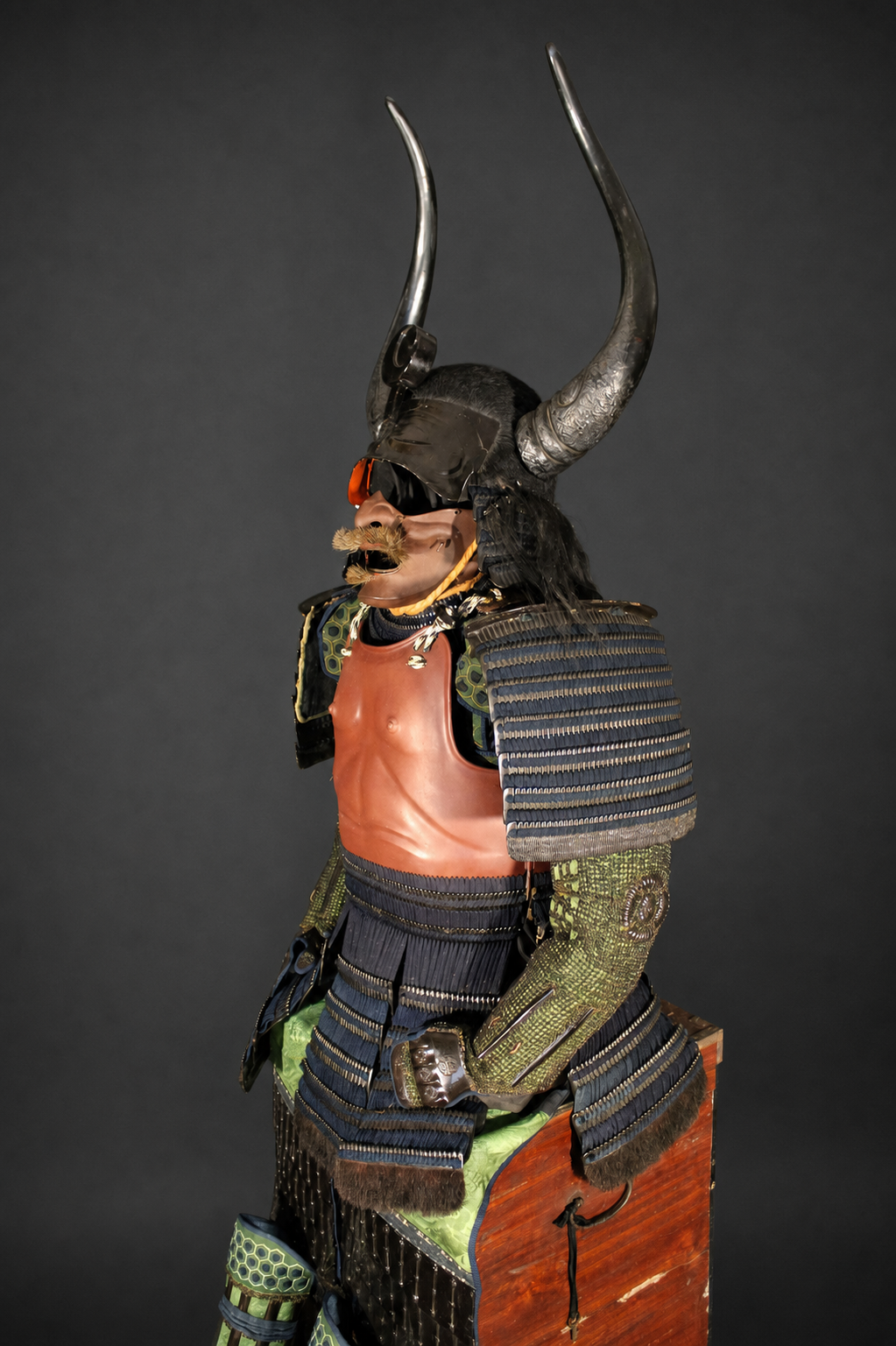
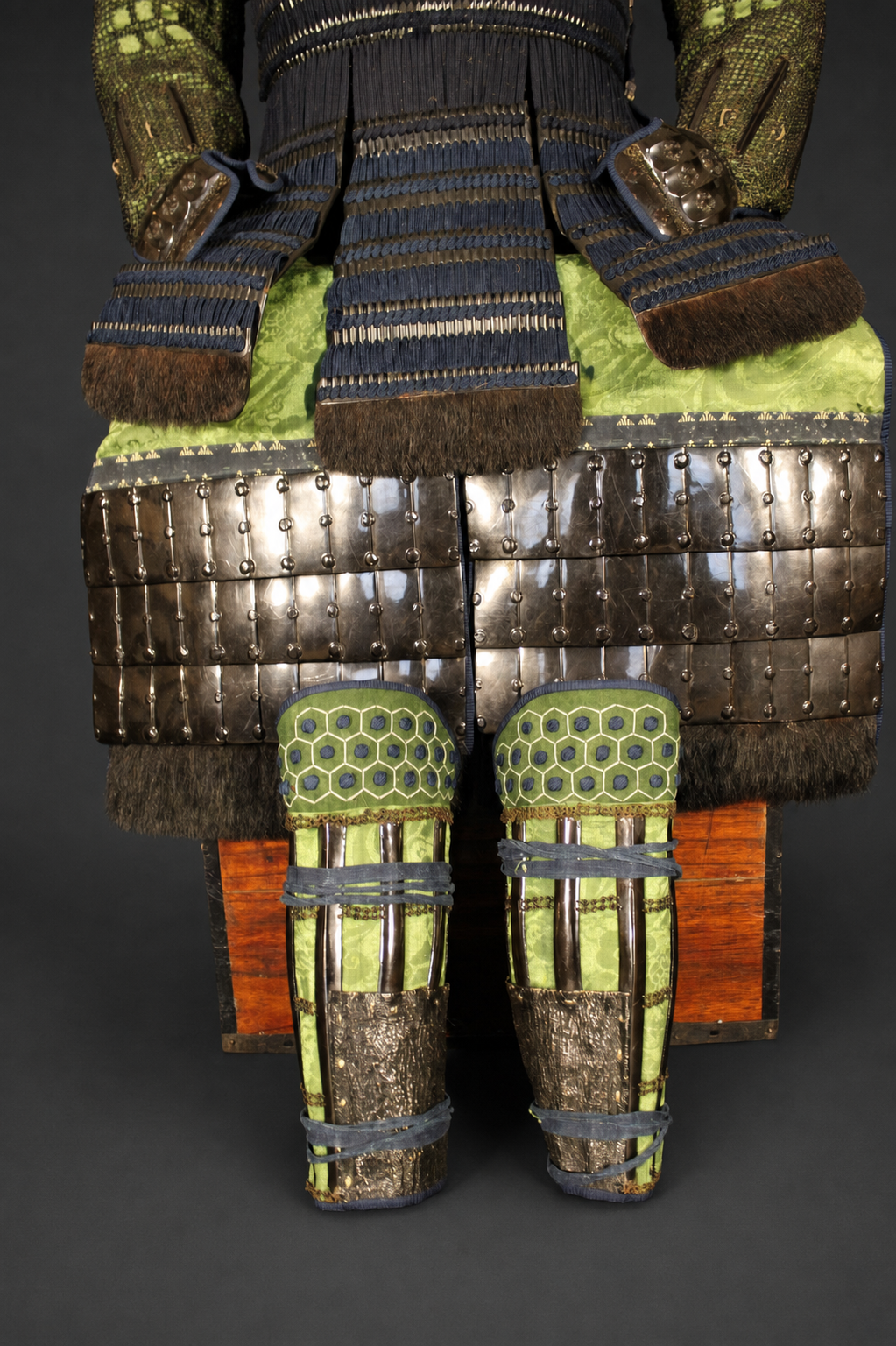
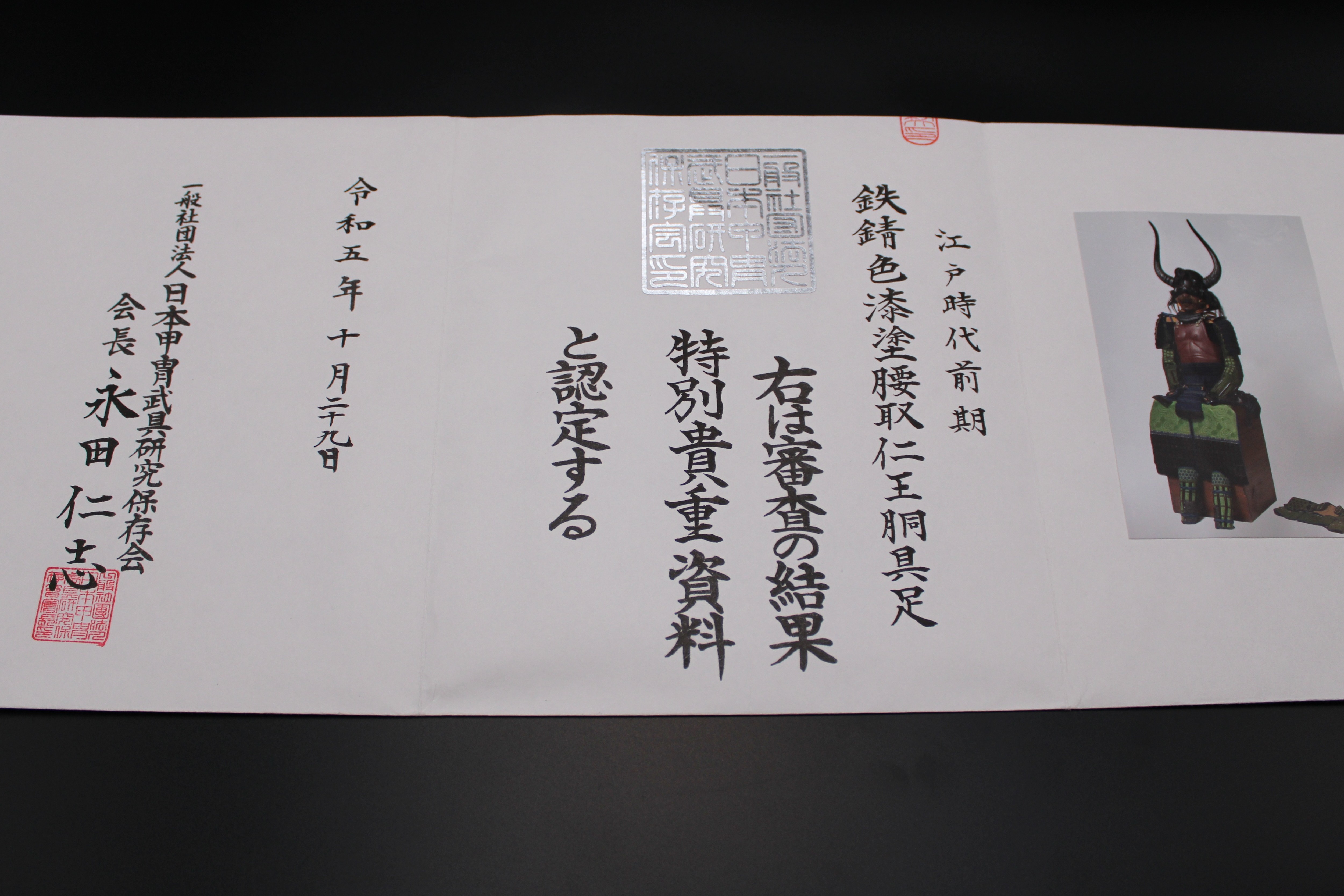
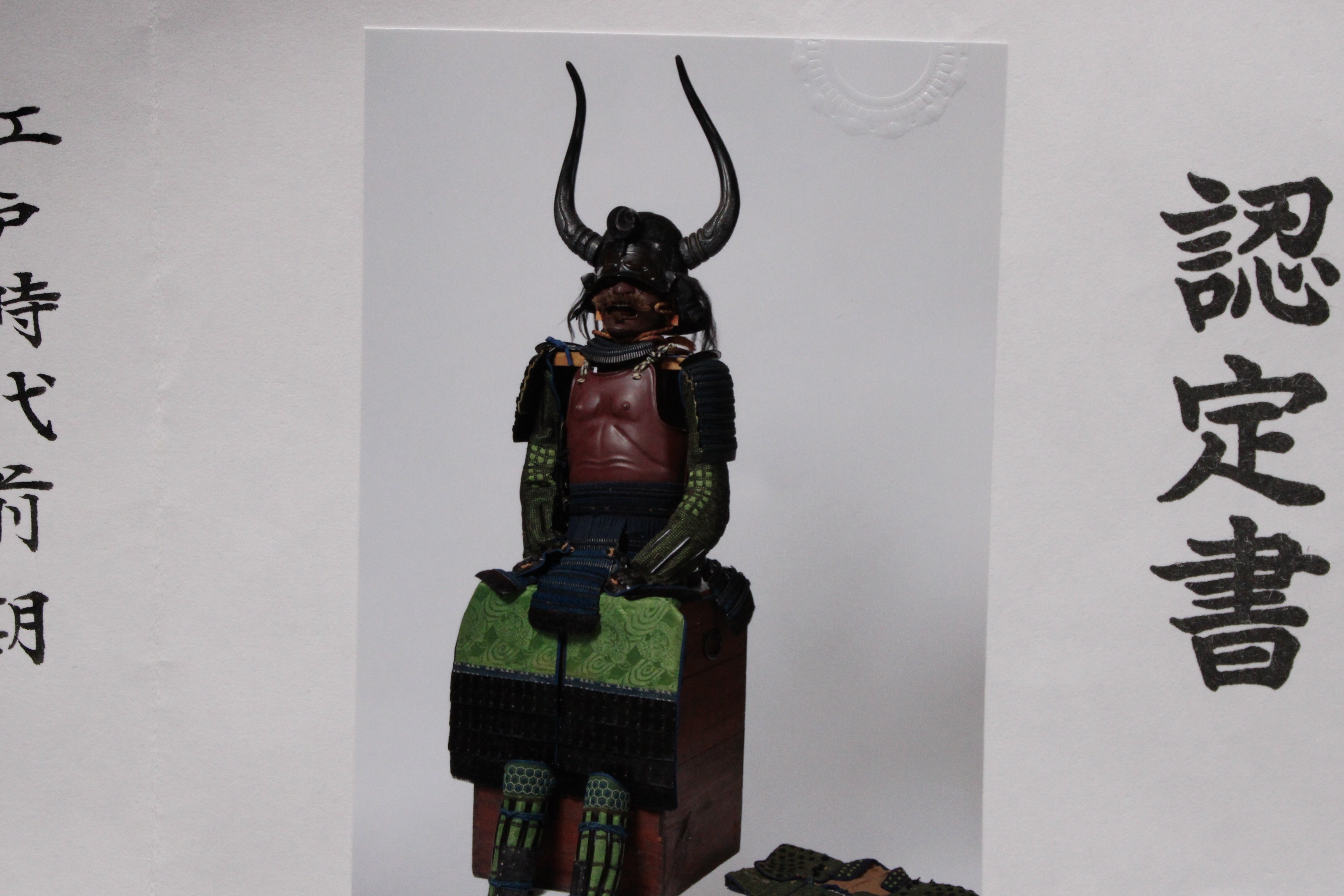
Rare armor Nió dó gusoku 仁 王 胴 具 足 in tecu sabi iro nuri design (with a lacquer finish imitating rusty iron), Momoyama period, early Edo period, early 17th century.
/The armor is equipped with an assessment from the Society for the Study of Japanese Armor and Historical Militaries 日本甲冑武具研究保存会 with the rating "especially valuable study material" 特別貴重資料 /
Armor Description:
The armor consists of an alternative kawari kabutó helmet, consisting of a three-panel zunari bachi helmet covered with bearskin (uege). Distinctive elements of the black lacquered (kuronuri) helmet are the side jewels of the wakidate in the form of water buffalo horns, the wrinkles (shiwa) on the front plate of the mabizashi and the front jewel of the maedate in the form of the ancestral kamon in the form of "tsuki ni hoshi" います星 (stars by the moon).
Fukigaeshi are characteristically small for this type of zunari kabutó, the protection of the nape of the shikoro is, like the rest of the armor, laced in the style of sukage with dark blue weave,
This lacing also has the neck protection of the tare face mask of the menpó in the design of me no shita bó, made of four kiritsuke kozane, as well as the cuirass in lacquer imitating rust (sabimono). The mask of the ressei men type (with a fierce expression) used to be used by warriors of high rank and has a mustache (kuchihige) and gilded teeth in the usual style.
The cuirass do in the form of a man's exposed torso has a holder for the personal banner sashimono gatari and a tube for inserting it uke zutsu on the back, also anatomically stylized. Under the cuirass is an armored vest manju no wa, consisting of a brigantine kikkō, steel hexagonal segments sewn between two layers of light green fabric.
The armoured sleeves sewn onto light green fabric are in the Shino kote style, the shoulder straps are in the "modern style" tōsei sode, again laced with dark blue odoshi ito.
The kusazuri divided into six streams are, like the menpō no tarea sode, made of serrated profiled sane lamellas (kiritsuke kozane) with goishi kashira endings. Their last lamella towards the ground is again covered with bearskin with fur, which corresponds to the kabutō helmet in the same style.
The haidate thigh protection is in the iyo style and is sewn onto a light green background, identical to the color of the shinguards in the Shino suneate style. The armour is completed with the original yoroi hitsu transport and storage box.
Stand is not included.
The price does not include shipping costs.
We are not just merchants. We are also guardians of cultural heritage.
Paid parking in the BCS building. Free parking available by arrangement. The history of Samurai Art began back in 1995. At its inception was an unwavering passion for the fascinating aesthetics and artisanal perfection of ancient Japan. This enthusiasm remains with us and motivates us to strive for the highest professional standards in our presentation of the material culture of the ancient samurai. Every sword or piece of armor in our collection is a unique, exceptional item with its own history. We collaborate with leading Japanese dealers and experts from prestigious Japanese organizations such as NBTHK and NTHK. We guarantee the authenticity and declared quality of all our gallery exhibits.
For serious buyers, we offer private viewings at our showroom in Prague.
By appointment only.
Nádražní 896/30, Prague 5
Schedule a meetingStories, Discoveries, and the Life of the Gallery